Monthly visits
20,221
2026-10
Monthly growth +888.3%

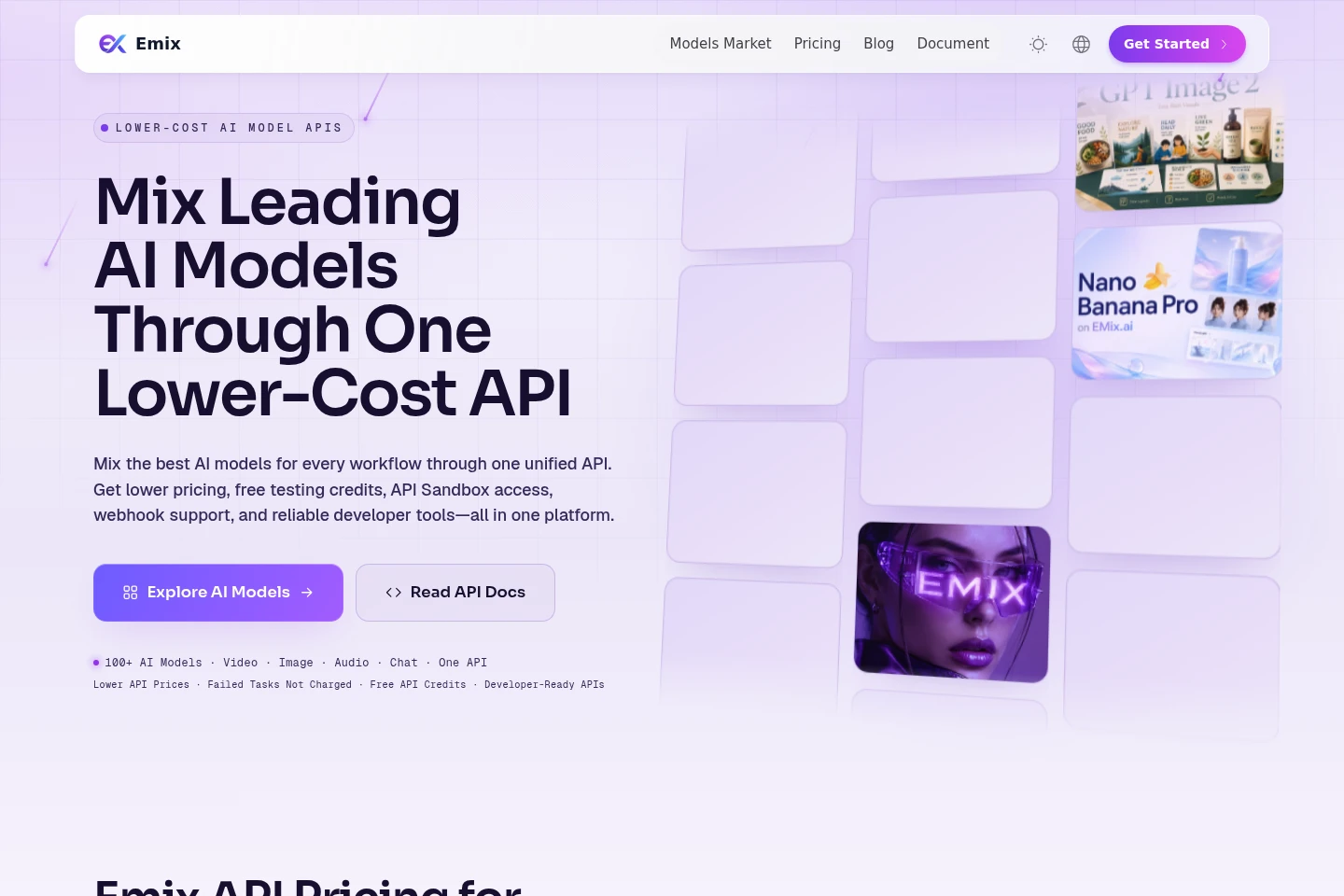
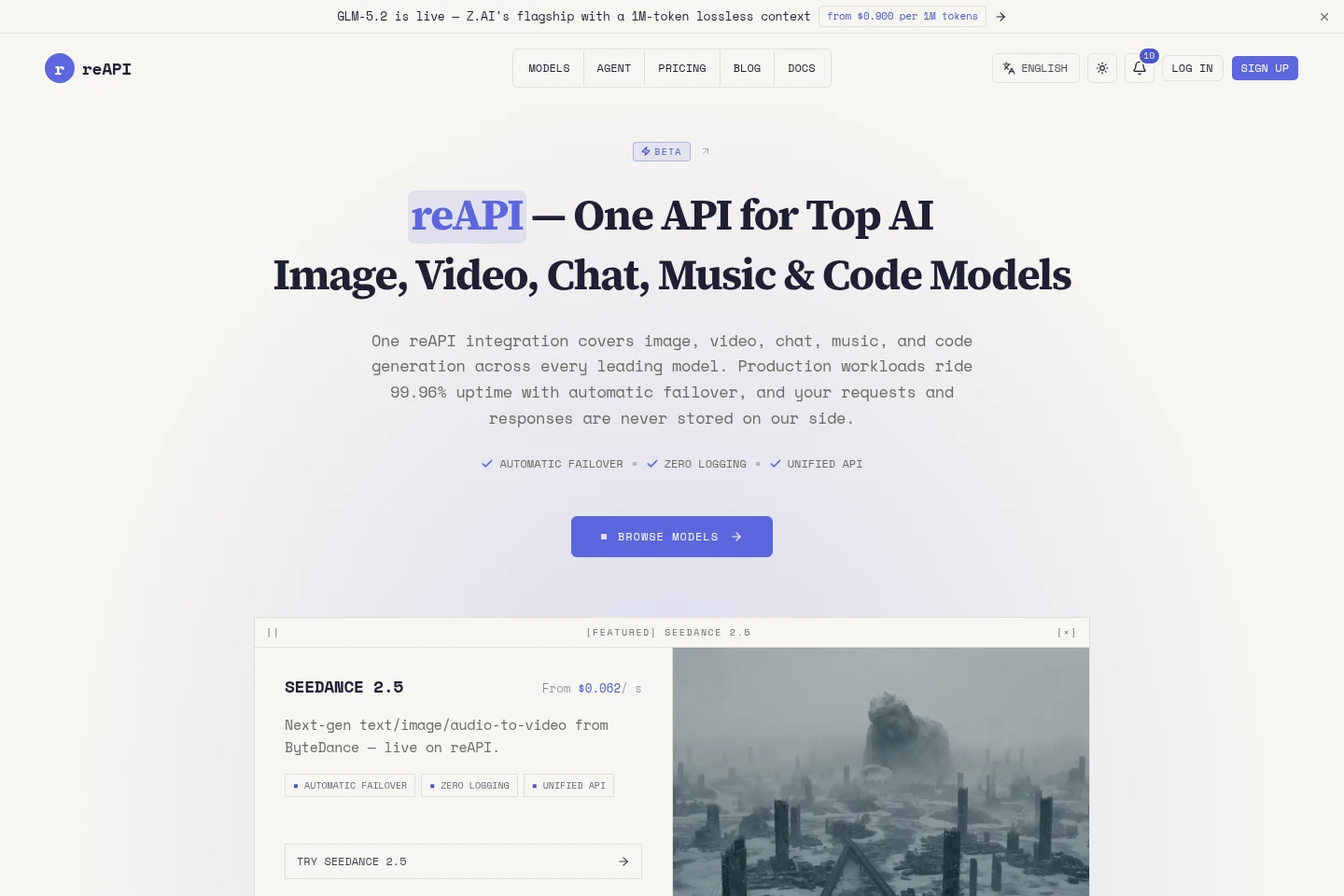
reAPI - One API for image, video, chat, music, and code models

reAPI provides a unified API endpoint for AI models that generate images, video, chat, music, and code. Developers use one reAPI key and compatible provider SDKs to send requests. The service routes calls based on vendor health, latency, and load, with automatic failover for supported models. Pricing uses prepaid credits charged per model call; credits do not expire, and failed generations are refunded.

Visit WebsiteUpdate this product

0Views

Capabilities

Unified model API

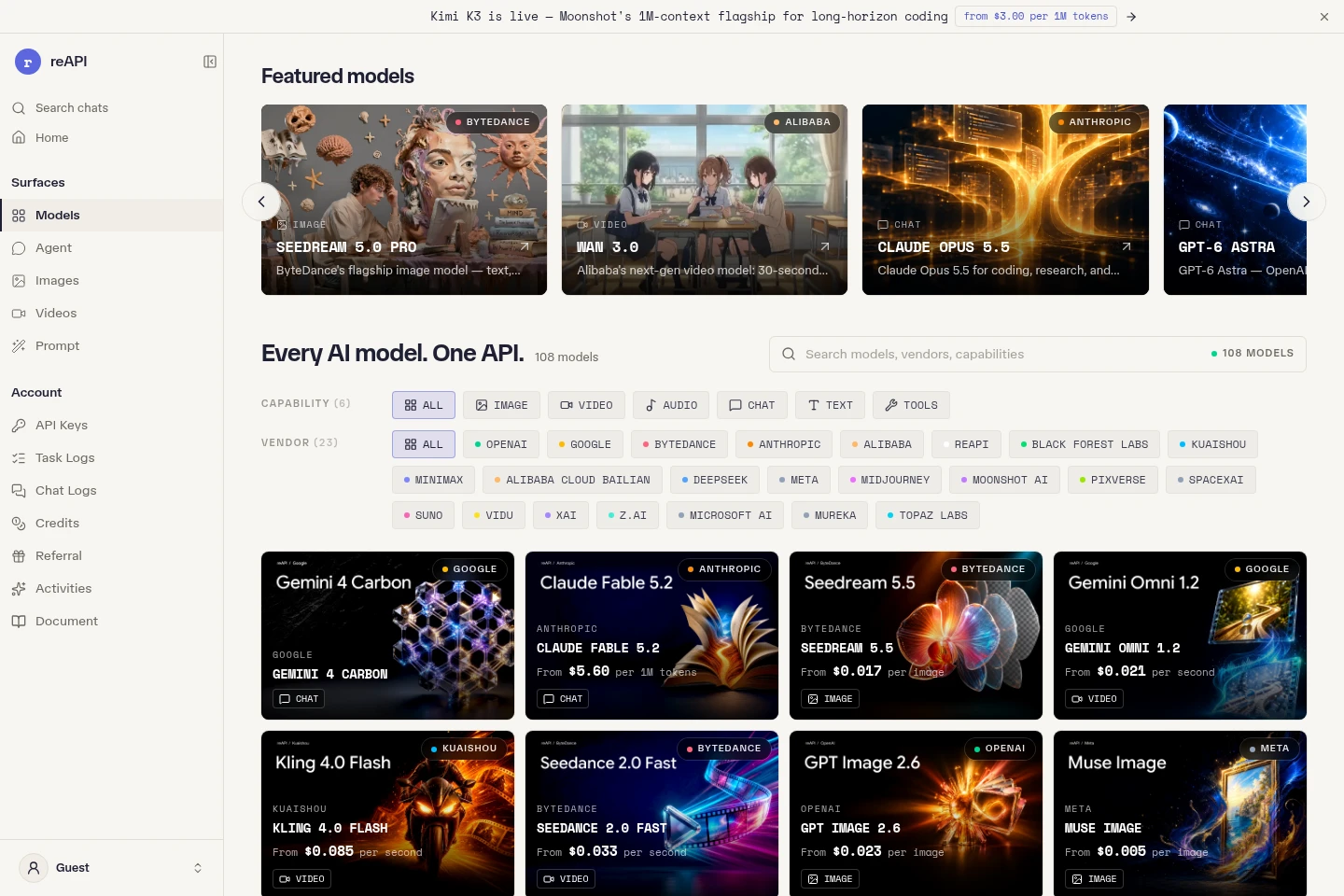
One API endpoint provides access to models for image, video, chat, music, and code tasks. Send requests with a reAPI key; supported OpenAI, Anthropic, and Google SDKs can retain their request and response shapes.

Automatic model routing

The service selects a candidate vendor using health, current latency, and load data. Health checks update the routing information continuously, and supported calls can move to another vendor when the selected vendor degrades.

Automatic failover

Requests for models available through multiple vendors can be rerouted when a vendor degrades. When only one source serves a model, reAPI returns a structured error instead of routing to another source.

Prepaid usage credits

Users purchase credits and spend them on completed model calls, with rates varying by model and unit such as tokens, images, or video seconds. Credits do not expire, and failed generations are refunded.

Request data handling

Request bodies and model outputs pass through the service without being persisted. The service retains billing and audit metadata including model name, token counts, latency, status code, and key identifier.


Pricing

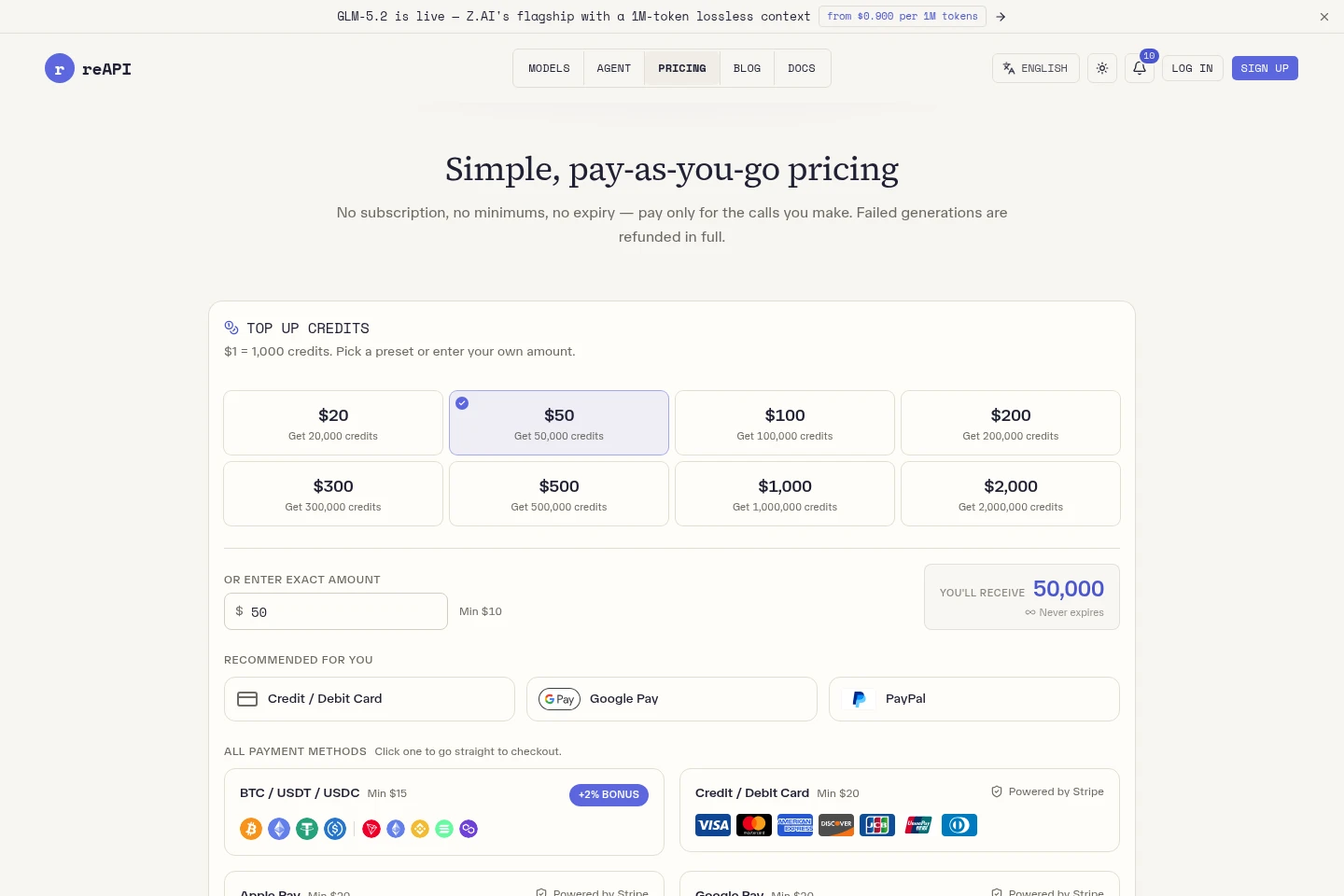
Paid usage is billed from prepaid credits rather than a recurring subscription. Compare the model-specific rates and units, such as tokens, images, or video seconds, when estimating spend; failed generations are refunded.

PlanPriceIncluded features and limits
Pay-as-you-go

$1 = 1,000 credits

  • Prepaid credits are used for model calls at model-specific rates.

  • Credits do not expire.

  • No subscription or minimum purchase is stated; custom top-ups have a $10 minimum.

  • Failed generations are refunded in full.

The pricing page lists payment methods with different minimums, including $15 for BTC, USDT, or USDC and $20 for several card and wallet options. Card, Apple Pay, and Google Pay through Pancake have a $25 minimum. Some payment methods include a stated fee or bonus.

Use cases

Integrate multiple AI models through one API

When an application needs models from multiple providers, developers can use one reAPI key and endpoint rather than configure each provider separately. Provider-compatible SDKs and request formats are supported for OpenAI, Anthropic, and Google.

Route model requests with failover

When an application depends on model availability, its requests can use reAPI routing informed by vendor health, latency, and load. For models served by multiple vendors, traffic may move to another vendor; single-source models return a structured error if they fail.

Pay for model calls as they are made

When using image, video, chat, music, or code models, users top up a credit balance and pay according to each model's unit rate. The prepaid credits do not expire, there is no subscription or minimum, and failed generations are refunded.

Limitations

  • Automatic routing to another vendor applies only to models available from multiple vendors; single-source models return a structured error rather than being rerouted.

  • The default account limits are 50 requests per second, 20 concurrent LLM requests, and 100 concurrent media tasks; higher limits require contacting support.

  • Credits are prepaid and do not expire; there is no subscription or monthly minimum, and failed generations are refunded.

reAPI alternatives

AIReiter

One API for image, video, and text generation

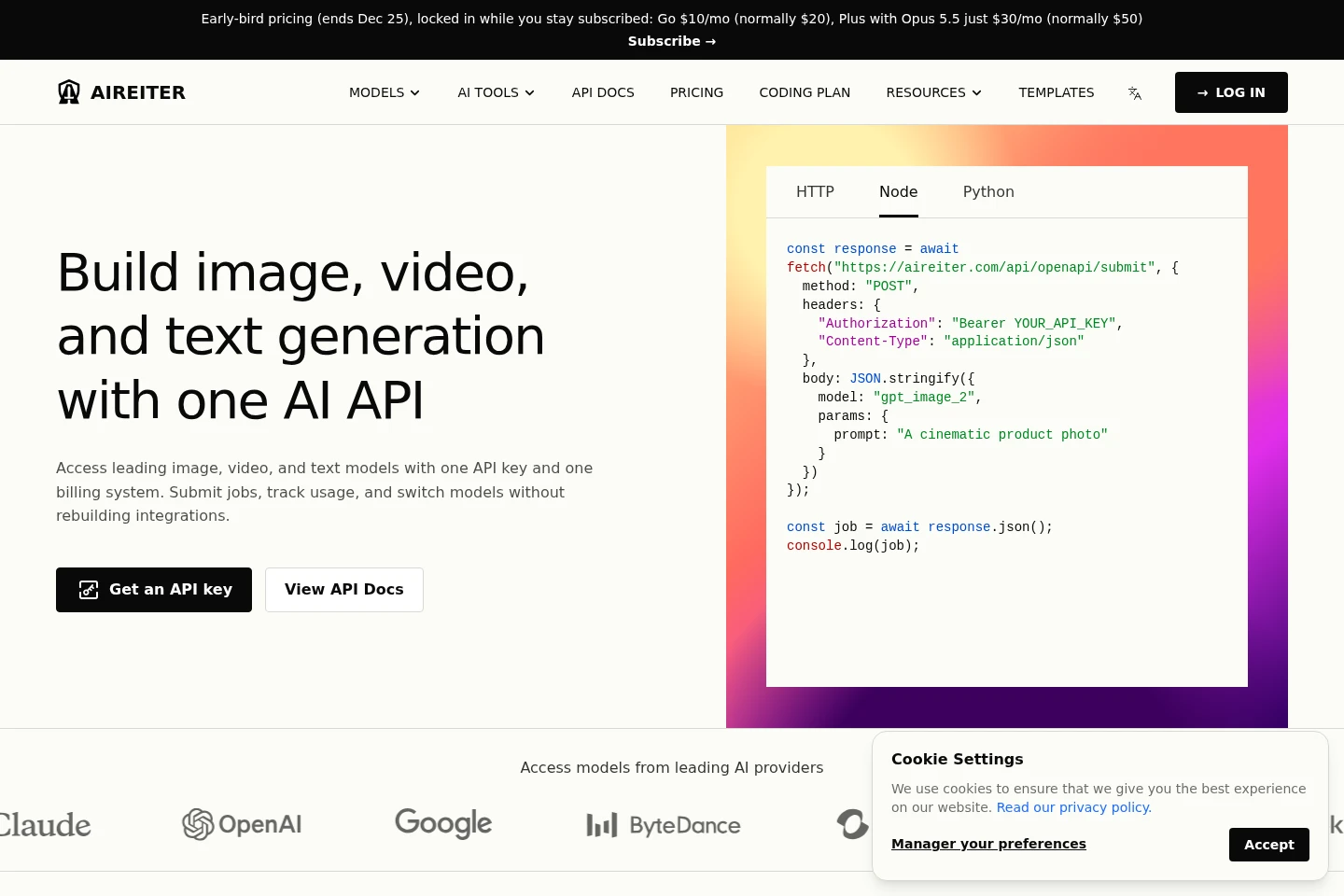
AIReiter provides API access to image, video, and language models through one key and billing system. Submit asynchronous media-generation jobs, track their status, and retrieve results, or use OpenAI-compatible endpoints for chat and text workflows. Usage tracking and model-specific pricing are available, alongside separate coding subscriptions.

  • Cloud
  • API
  • Paid
  • Go$10/mo early-bird; normally $20/mo
  • Plus$30/mo early-bird; normally $50/mo
  • Pro$100/mo, billed monthly
  1. Emix

    One API for chat, image, video and audio AI models

    Paid
  2. APIMODELS

    One API for image generation models, billed per successful request

    Paid
  3. AI Video API

    One API for AI video, image, and music generation

    $10 · $10
  4. deAPI

    One API for open-source generative AI models

    Paid
  5. EmbedAPI

    One API for models, image styles, and usage-based billing

    Starter · Pay-as-you-go; top up credits

Who it is for

  • Developers building applications that call multiple AI models

  • Teams operating AI workloads that need model routing and vendor failover

  • Users who want to pay for AI model calls from a prepaid credit balance

FAQ

How does reAPI route a model request?

It considers the model name, vendor health, current latency, and load, then routes the call to a suitable candidate. Health checks update routing continuously. If the selected vendor degrades, requests for models with multiple vendor sources can move to another vendor; single-source models return a structured error.

Does reAPI store request bodies or model outputs?

No. Request bodies and model outputs pass through the service but are not persisted. Billing and audit metadata is retained, including model name, token counts, latency, status code, and key identifier.
How can an application connect to reAPI?

Set the API base URL to https://reapi.ai/api/v1 and use a key created in the dashboard. OpenAI, Anthropic, and Google SDKs can work without modification while reAPI preserves their request and response shapes.

How does reAPI charge for model calls?

It uses prepaid, pay-as-you-go credits, with charges based on each model's unit, such as tokens, images, or video seconds. There is no subscription or monthly minimum, credits do not expire, and failed generations are refunded.

What are the default account limits?

The defaults are 50 requests per second, 20 concurrent LLM requests, and 100 concurrent media tasks. Contact reAPI through its listed support channels to request higher account limits.

Comments

Please sign in to leave a comment.
No comments yet. Be the first to share your thoughts!