

- Monthly visits
- 2,863
- 2026-09
- Monthly growth +603.4%
VidaiMock - Deterministic LLM mocks for CI testing
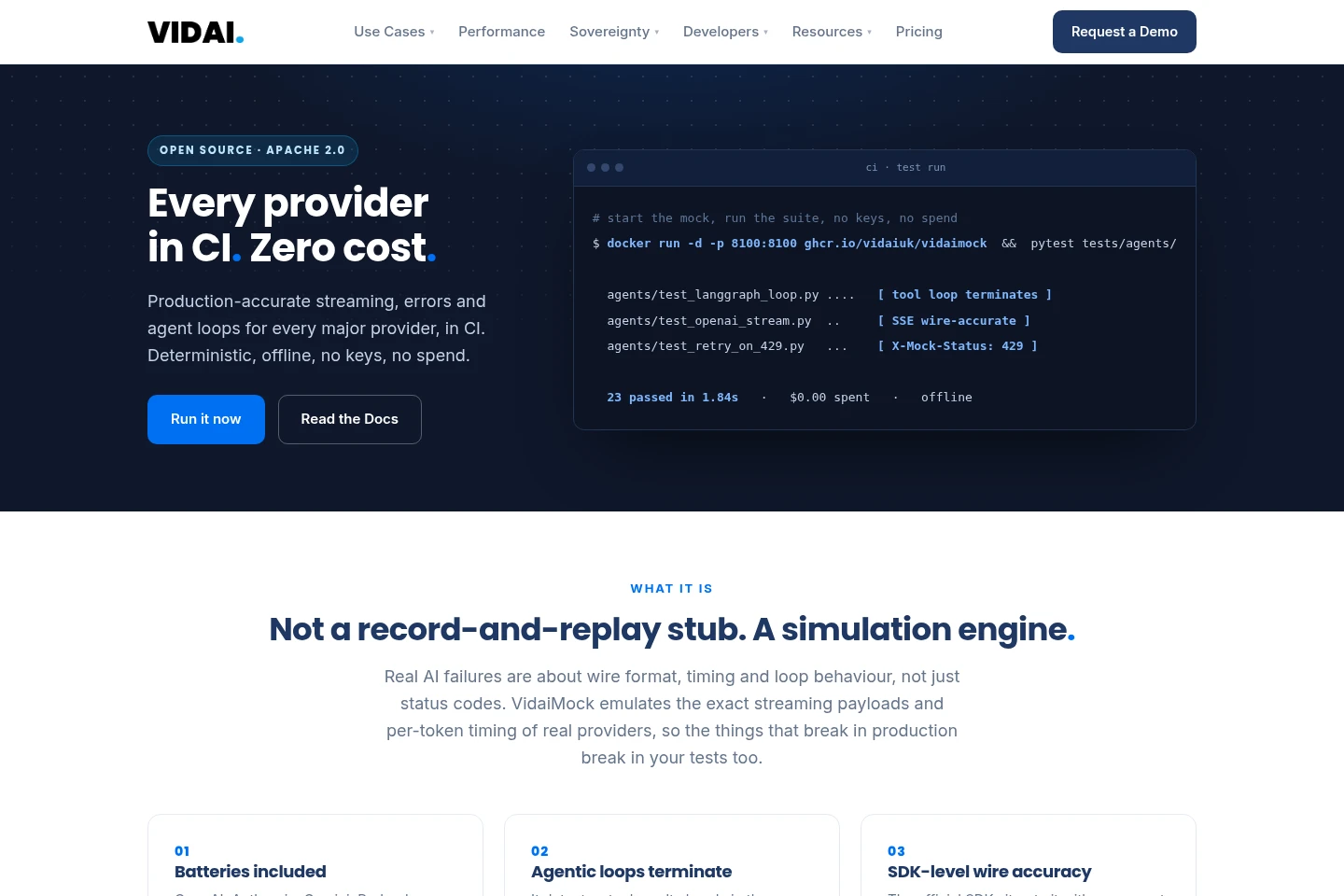
VidaiMock is an open-source mock LLM API server for testing AI agents in continuous integration. It simulates provider-shaped streaming, errors, and tool-call loops offline, without API keys or live-provider spend. Run it with Docker or a binary, and configure provider behavior with YAML files and Tera templates.
- AI Coding
- Test Automation
- LLM APIs
- GPU Cloud
- Software
- LLM mock server
- AI agent CI testing
- mock OpenAI Anthropic Gemini
Capabilities
Provider API simulation
Simulates LLM provider APIs with streaming payloads, errors, and timing. Supports OpenAI, Anthropic, Gemini, Bedrock, Azure, Cohere, Mistral, and Groq with bundled configurations and no setup.
Agent loop handling
Emits provider-shaped tool calls and ends a loop with text synthesis after a tool result appears in the conversation. Recognizes OpenAI, Anthropic, and Gemini tool-result formats.
Configurable failure testing
Returns provider-shaped errors for chosen HTTP statuses and supports chaos probability. Set failures through a header, URL query, or configured probability to exercise SDK error paths.
Local deployment options
Runs locally as a Docker container, Docker Compose service, or binary. Use bundled defaults or override YAML providers and Tera templates from a configuration directory.
Pricing
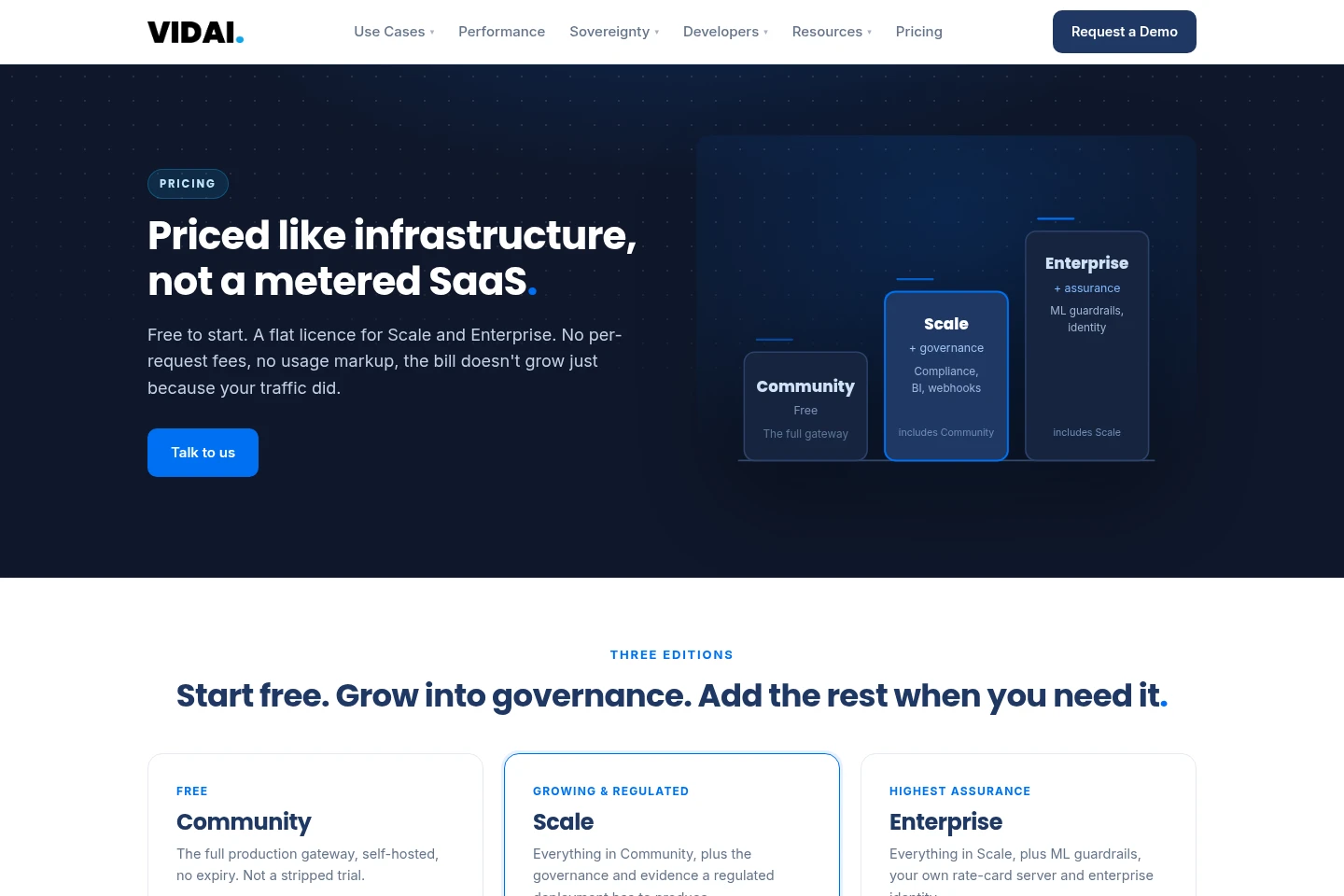
VidaiMock is open source and offered at no charge; the supplied pages do not list paid VidaiMock plans. Choose Docker, Docker Compose, or the binary based on how you want to run the local mock.
Use cases
Test AI agents in CI without live API calls
When validating AI agent changes in continuous integration, point an SDK at VidaiMock instead of a live provider. Run deterministic, offline tests for streaming, errors, and tool loops without API keys or provider spend.
Exercise provider error handling
When checking how an application handles provider failures, request chosen status codes through a header or URL query, or use chaos probability. VidaiMock returns provider-shaped error envelopes for testing SDK and application paths.
Test tool-call loop termination
When testing an agent framework that calls tools, let VidaiMock emit a native-shaped tool call and then provide a tool result in the conversation history. It switches to text synthesis with a terminal signal so the loop can end.
Who it is for
Developers testing AI agents and tool-call frameworks in CI
Engineers validating LLM SDK compatibility and provider error handling
Platform engineers who need offline, repeatable LLM test infrastructure
FAQ
Which provider APIs does VidaiMock simulate?
It includes configurations for OpenAI, Anthropic, Gemini, Bedrock, Azure, Cohere, Mistral, and Groq. Start the mock and point a compatible SDK at it; the page also describes recognized tool-result formats for OpenAI, Anthropic, and Gemini.
Can it run without a network connection or API keys?
Yes. The mock runs locally and is described as offline, deterministic, and requiring no provider keys. The documented CI example runs tests with no live-provider spend.
How can I run VidaiMock?
Use Docker Compose, a Docker container, or the binary. Docker Compose is the recommended path; the binary is available for macOS arm64, with Linux and Windows covered in the documentation.
Can I customize provider behavior?
Yes. Bundled YAML provider configurations and Tera templates can be overridden with files in a configuration directory, without recompiling. An isolated-mode environment variable can restrict the mock to your overrides.
How does VidaiMock handle agent tool loops?
It emits a tool call when tools are defined and no result is present, then switches to plain-text synthesis when a tool result appears in the history. It recognizes OpenAI, Anthropic, and Gemini result formats.
Comments