
Monthly visits
14,886
2026-10
Monthly growth +1,810.9%

Forge - One OpenAI-compatible API for connected model providers

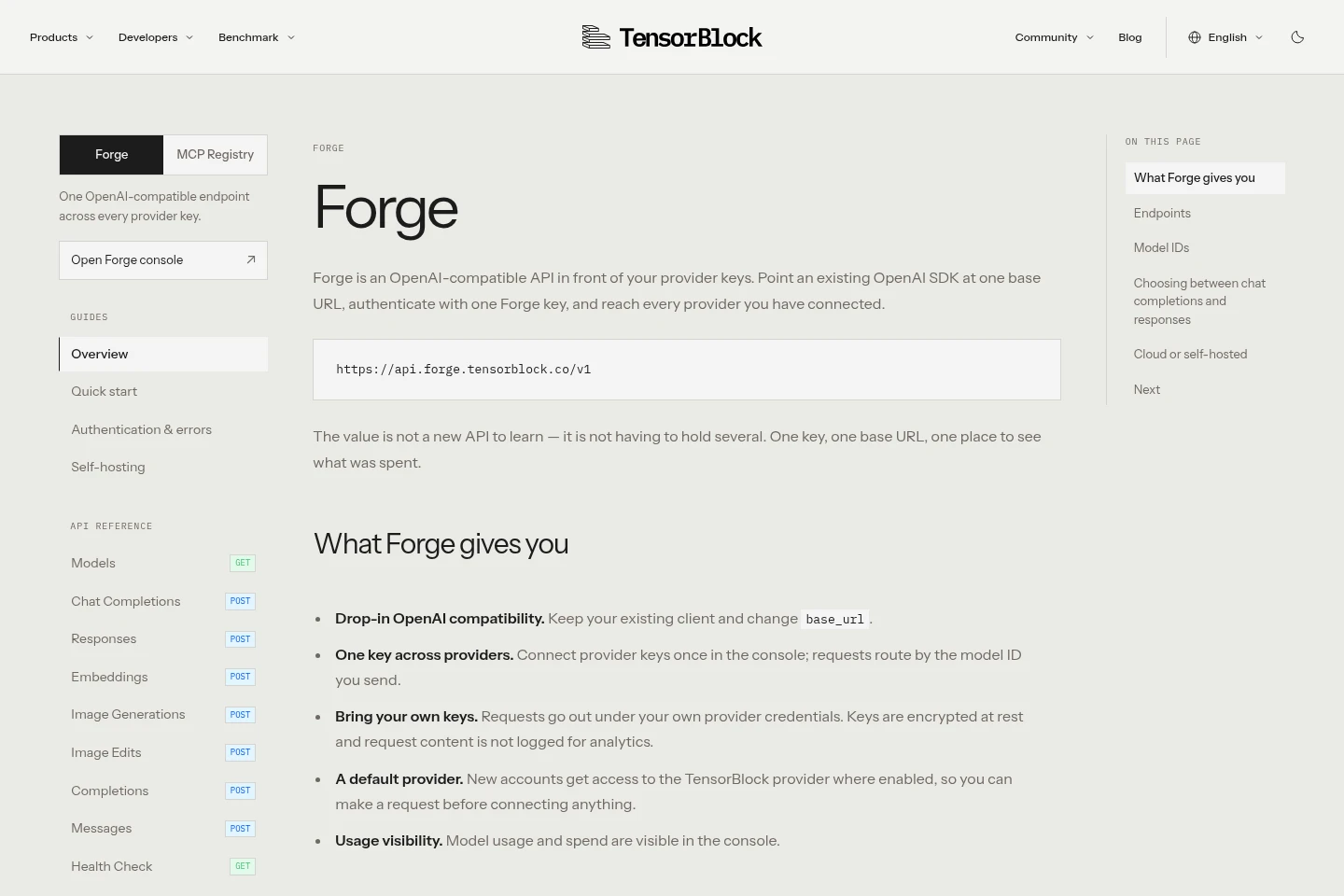
Forge is a hosted or self-hosted API gateway for AI model providers. Connect provider keys in its console, then use one Forge key and base URL with OpenAI-compatible endpoints for chat, responses, embeddings, image generation and editing, and text completions. The console also shows model usage and spend.

Visit WebsiteUpdate this product

0Views

Capabilities

Unified provider API routing

Routes API requests to connected model providers through one OpenAI-compatible base URL. Connect provider keys in the console, authenticate with a Forge key, and select a model using its provider/model ID.

Multiple inference endpoints

Provides endpoints for chat completions, responses, embeddings, image generation and editing, text completions, and Anthropic-format messages. Requests require authentication under /v1, and endpoint behavior and supported models vary.

Usage and spend visibility

Displays model usage and spend in the Forge console. Use it to inspect activity associated with your account; the available models depend on connected provider keys, account entitlements, and provider availability.

Self-hosted deployment

Lets operators run Forge alongside Postgres and Redis on their own infrastructure. Follow the self-hosting documentation when infrastructure control is needed.

Pricing

Pricing and plan names are not specified in the supplied Forge pages. Compare current plan terms on the official Forge site before choosing; provider charges and any Forge charges are not detailed here.

Use cases

Use one client with multiple model providers

When an application needs models from more than one connected provider, point an existing OpenAI SDK to Forge's base URL and authenticate with one Forge key. Requests route according to the provider/model identifier, subject to connected keys and account access.

Integrate model inference into an application

When an application needs text, embeddings, or image operations, call the corresponding Forge endpoint with an authenticated request. Choose the endpoint and model format the model supports; image edits use JSON with an image URL or base64 string.

Inspect model usage and spend

When an account needs visibility into its model activity, open the Forge console to view model usage and spend. The documentation describes these views but does not specify a reporting period or export options.

Run Forge on your own infrastructure

When infrastructure control is required, deploy Forge with Postgres and Redis using the self-hosting guide. This is a customer-operated deployment rather than the hosted cloud option.

Limitations

  • Models reachable through an API key depend on connected provider keys, account entitlements, and what each provider currently offers.

  • The /v1/images/edits endpoint accepts JSON with an image URL or base64 string; multipart requests and streamed file handles do not work.

  • The /v1/messages endpoint uses Anthropic-format messages rather than OpenAI format and requires max_tokens.

  • All endpoints under /v1 require authentication; the /health endpoint is unauthenticated.

Alternatives

ForgeCode

A software factory that builds, tests, and ships code

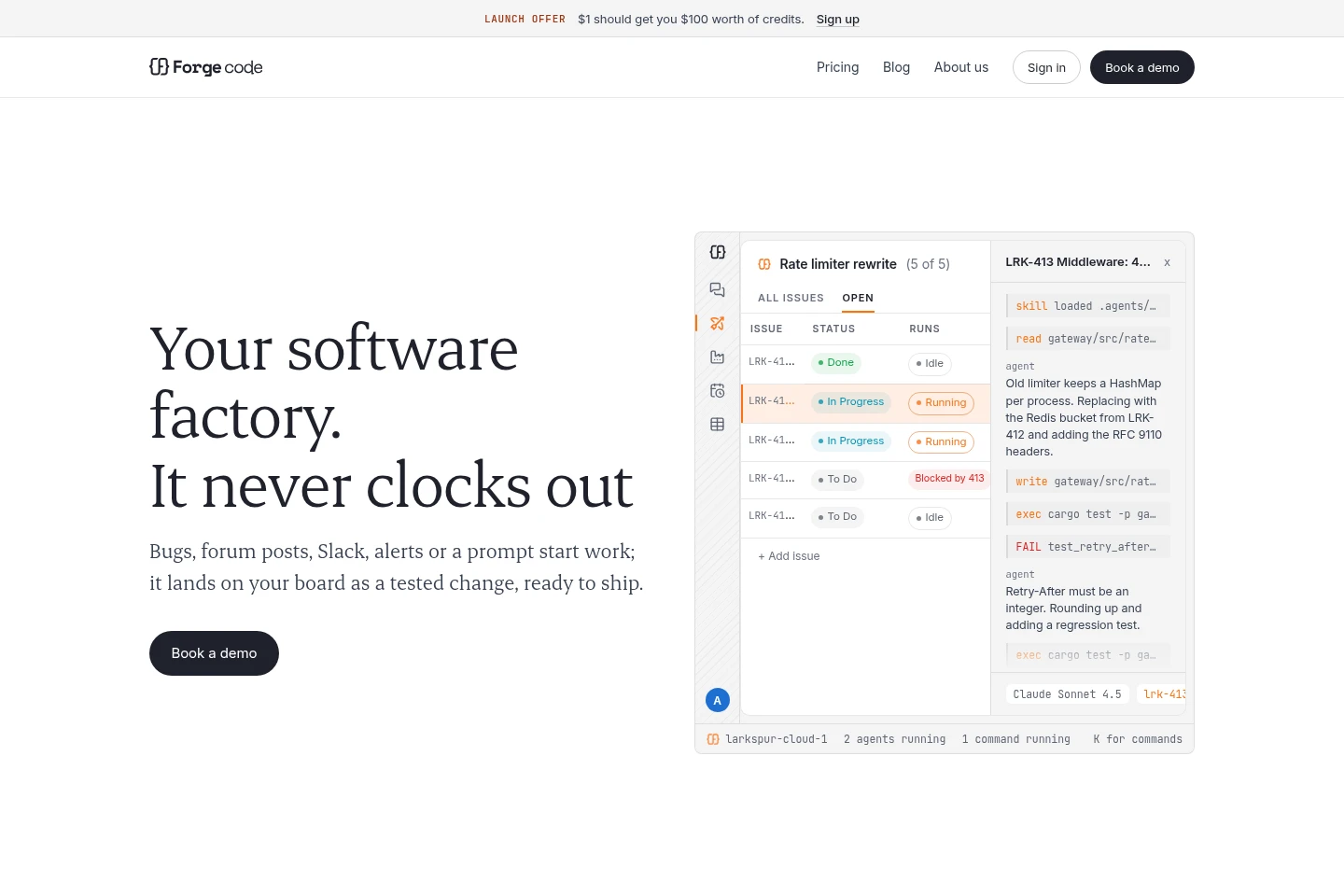
ForgeCode turns GitHub issues, Slack messages, alerts, forum posts, and prompts into engineering missions. Its factories run coding agents that build and test changes, open pull requests, monitor work, and follow repository merge policies. Teams can use ForgeCode-managed cloud or, on Enterprise, bring their own AWS, Google Cloud, or Azure infrastructure.

  • Cloud
  • Paid
  • Pay as you go$0.20 per agent-hour on Small
  • EnterpriseCustom pricing; priced case by case
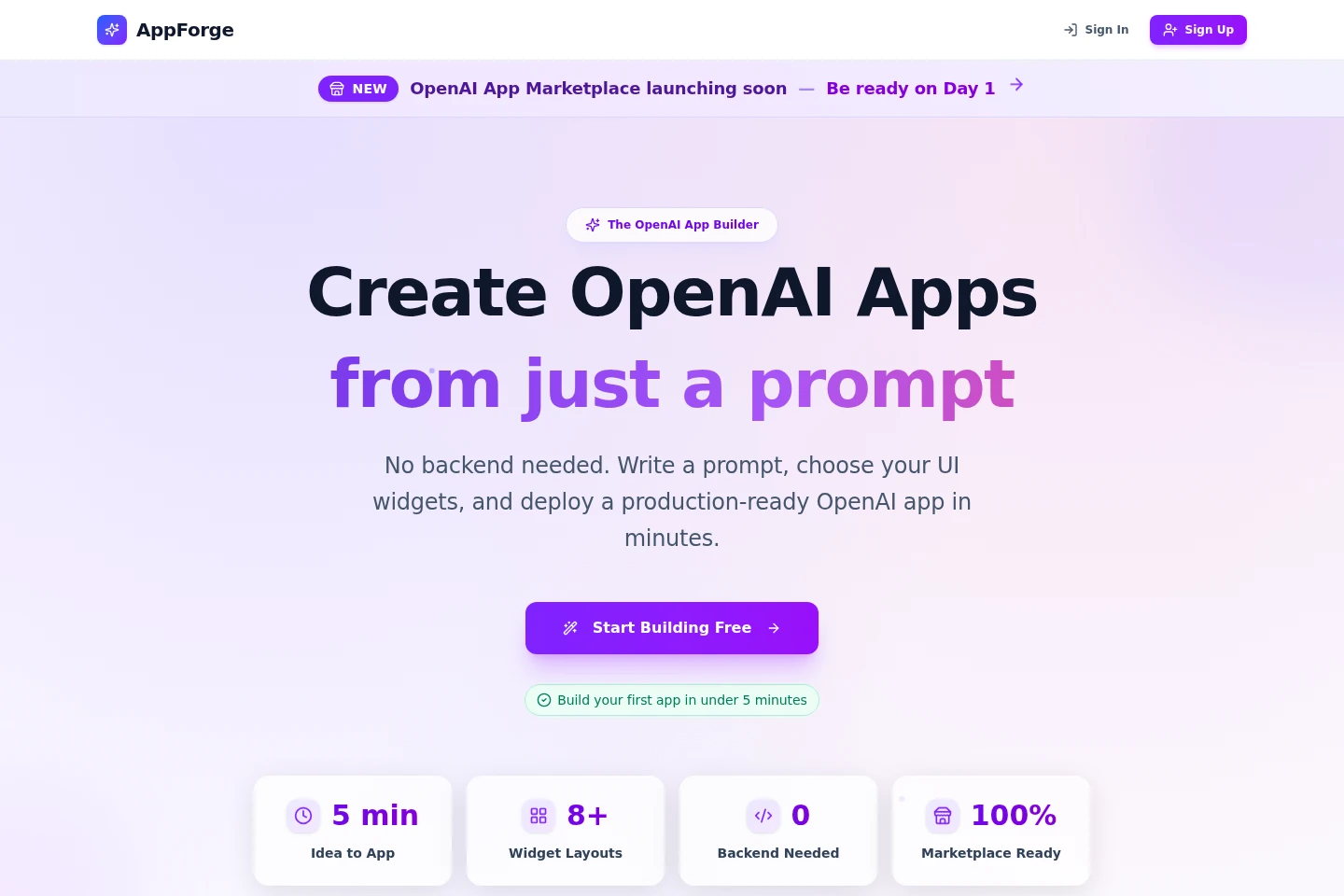
  1. AppForge

    Build and deploy OpenAI apps from prompts or REST APIs

    Free · $0 forever
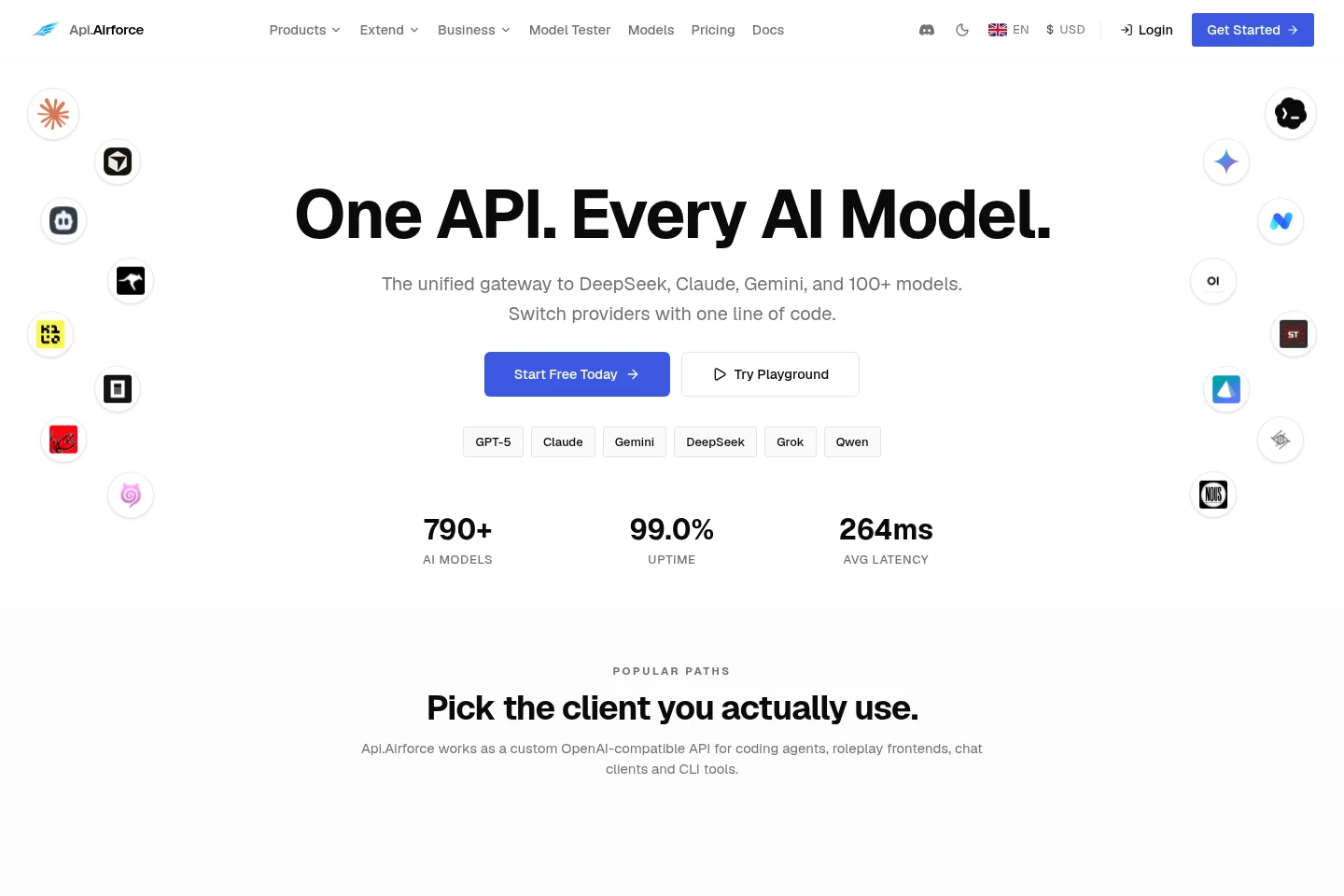
  2. Api.Airforce

    One API for multiple AI model providers

    Free · $0.00/month
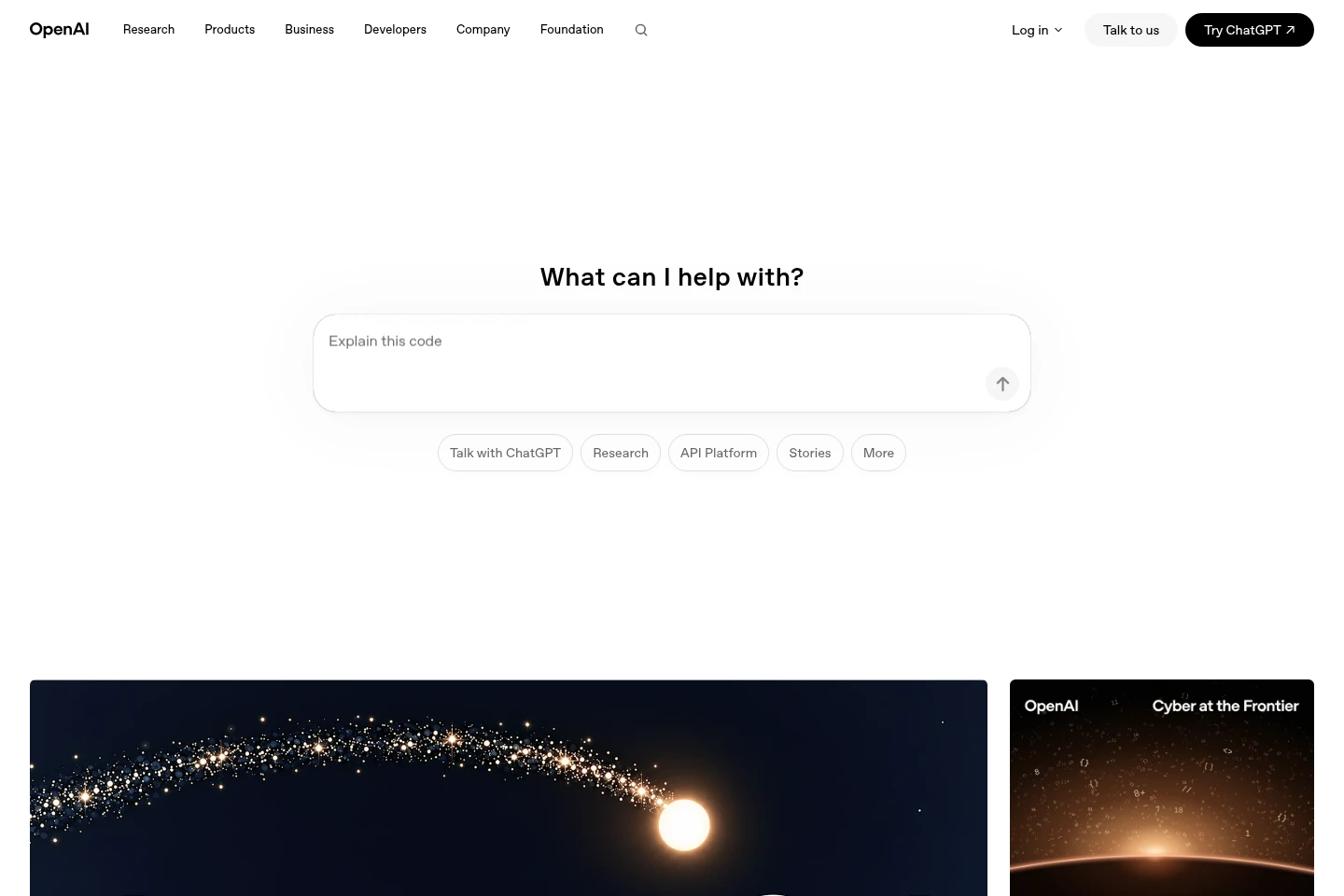
  3. OpenAI

    Industry-leading AI models and developer platform for enterprise applications

    Freemium
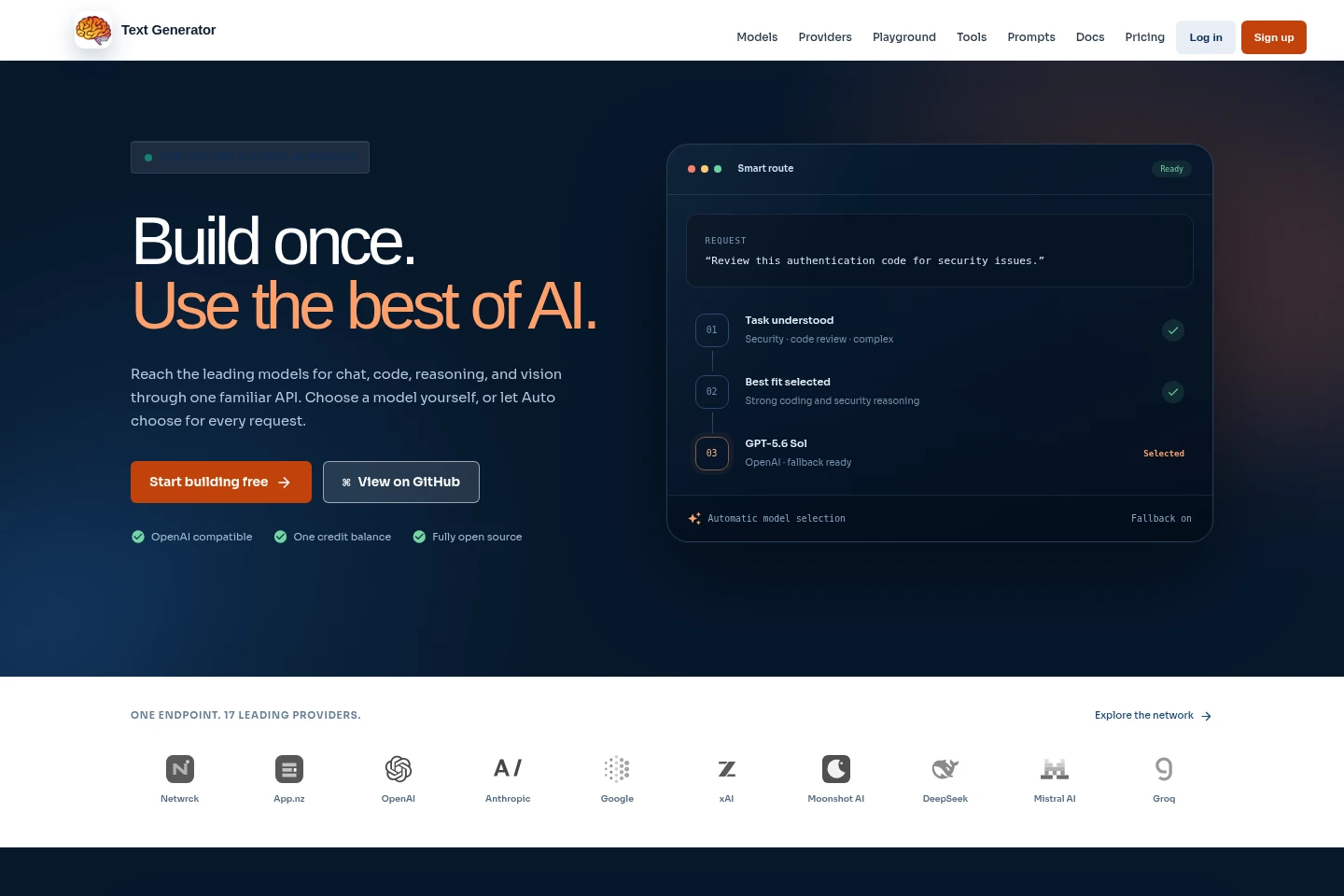
  4. Text Generator

    One API for routing text, speech, and vision AI models

    Cloud Text Generator · $190.00 USD annually
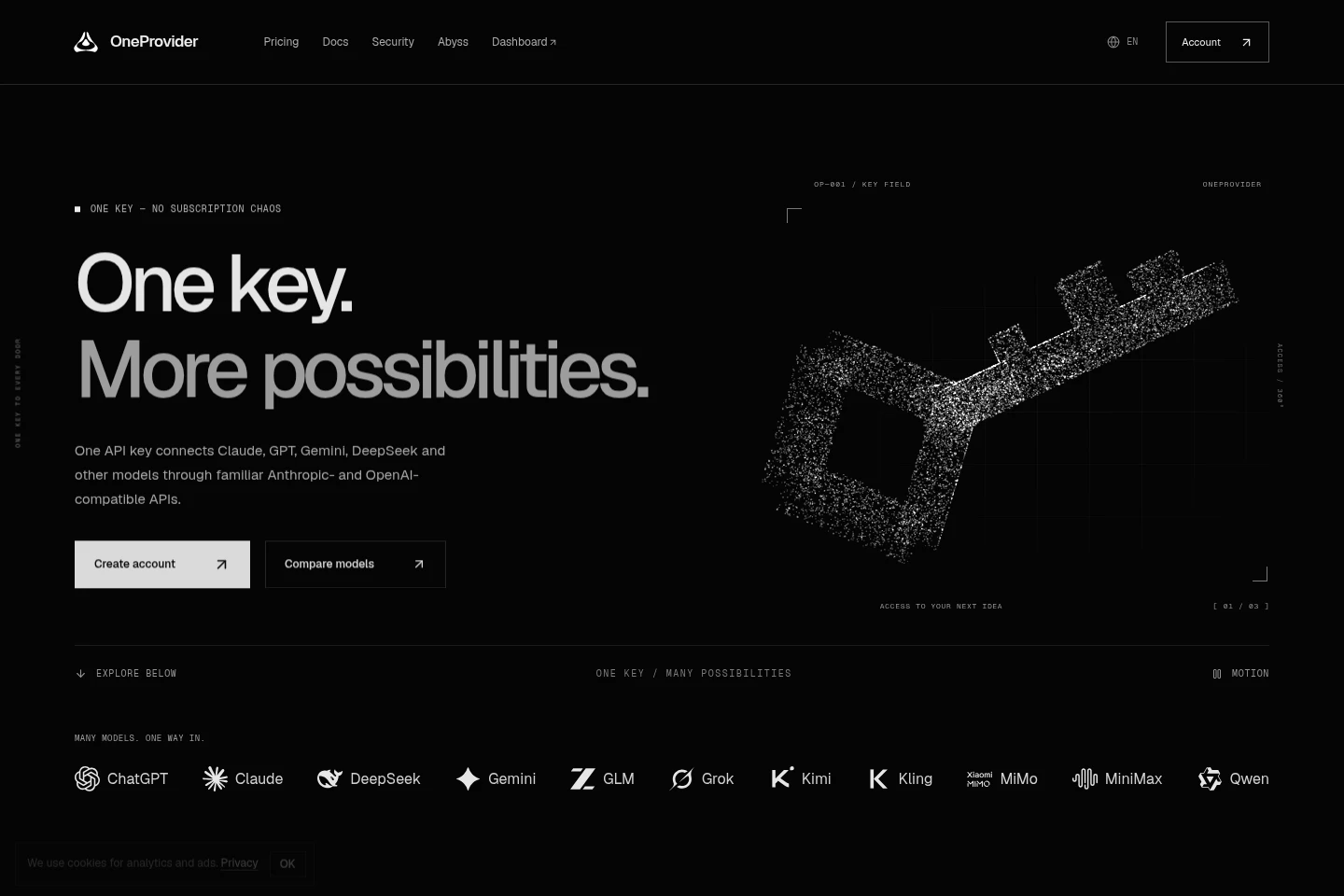
  5. OneProvider

    One API key for multiple AI models

    Paid

Who it is for

  • Developers integrating AI models from multiple providers

  • Operators who need to run an AI model gateway on their own infrastructure

  • Teams that need a shared API endpoint and visibility into model usage and spend

FAQ

How does Forge connect to model providers?

Connect provider keys in the Forge console, then send requests to one base URL using a Forge key. Forge routes each request according to the provider/model identifier and the providers available to that account.

Can I use an existing OpenAI SDK?

Yes. Forge documents OpenAI-compatible endpoints; point the SDK to the Forge base URL and authenticate with a Forge key. Some endpoint details differ from OpenAI, so check the API reference for the operation you use.

Which inference endpoints are available?

The documented endpoints include models, chat completions, responses, embeddings, image generation and editing, text completions, Anthropic-format messages, and a health check. Model availability and endpoint compatibility depend on the model and account.

Does Forge support self-hosting?

Yes. The documentation describes running Forge with Postgres and Redis on your infrastructure. The hosted cloud option is also available at forge.tensorblock.co.

Are all Forge endpoints authenticated?

No. Requests under /v1 require authentication, while /health is unauthenticated.

Comments

Please sign in to leave a comment.
No comments yet. Be the first to share your thoughts!