

- Monthly visits
- 1,444
- 2026-09
- Monthly growth -5.3%
TaleHug - Turn a child's idea or drawing into an illustrated storybook
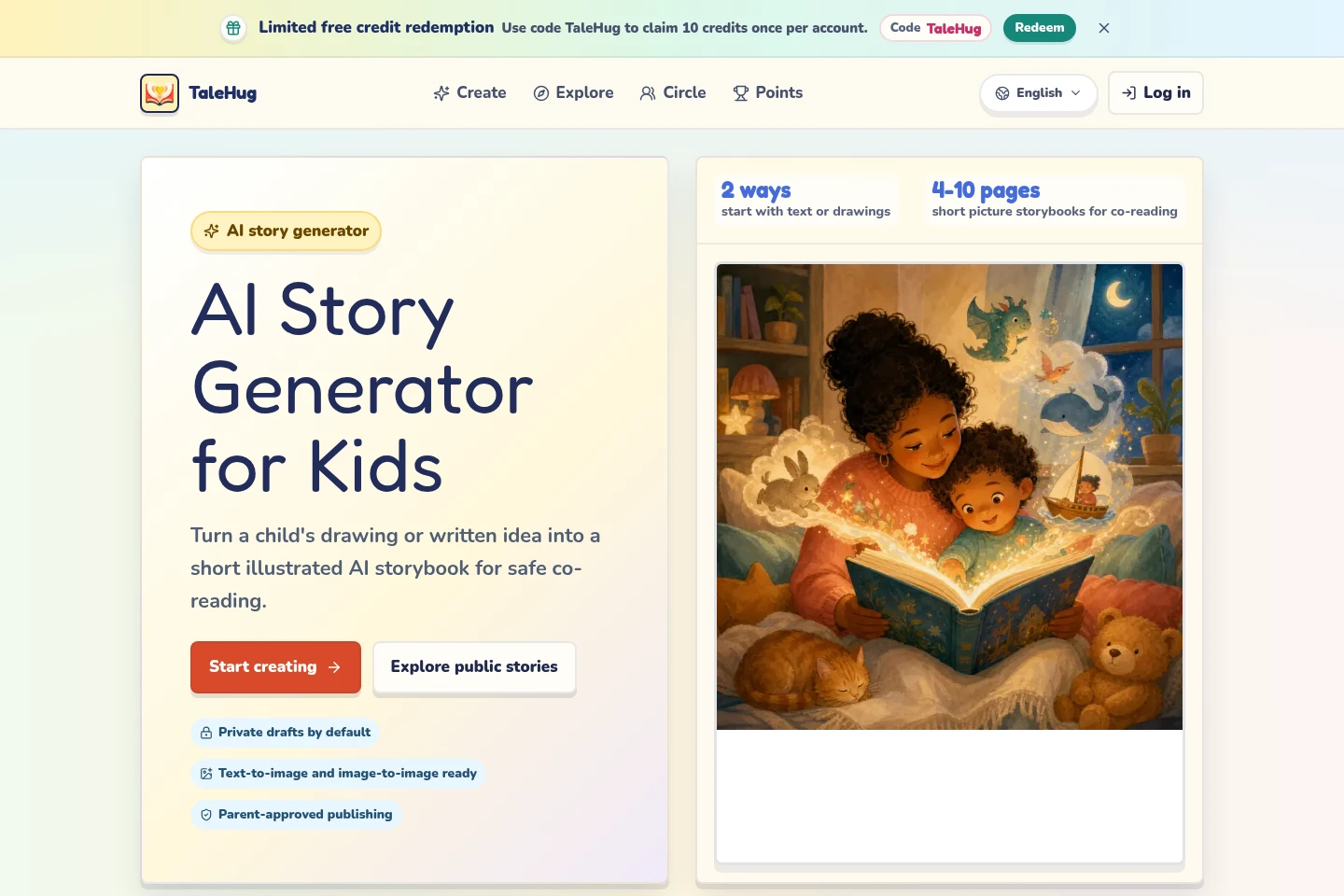
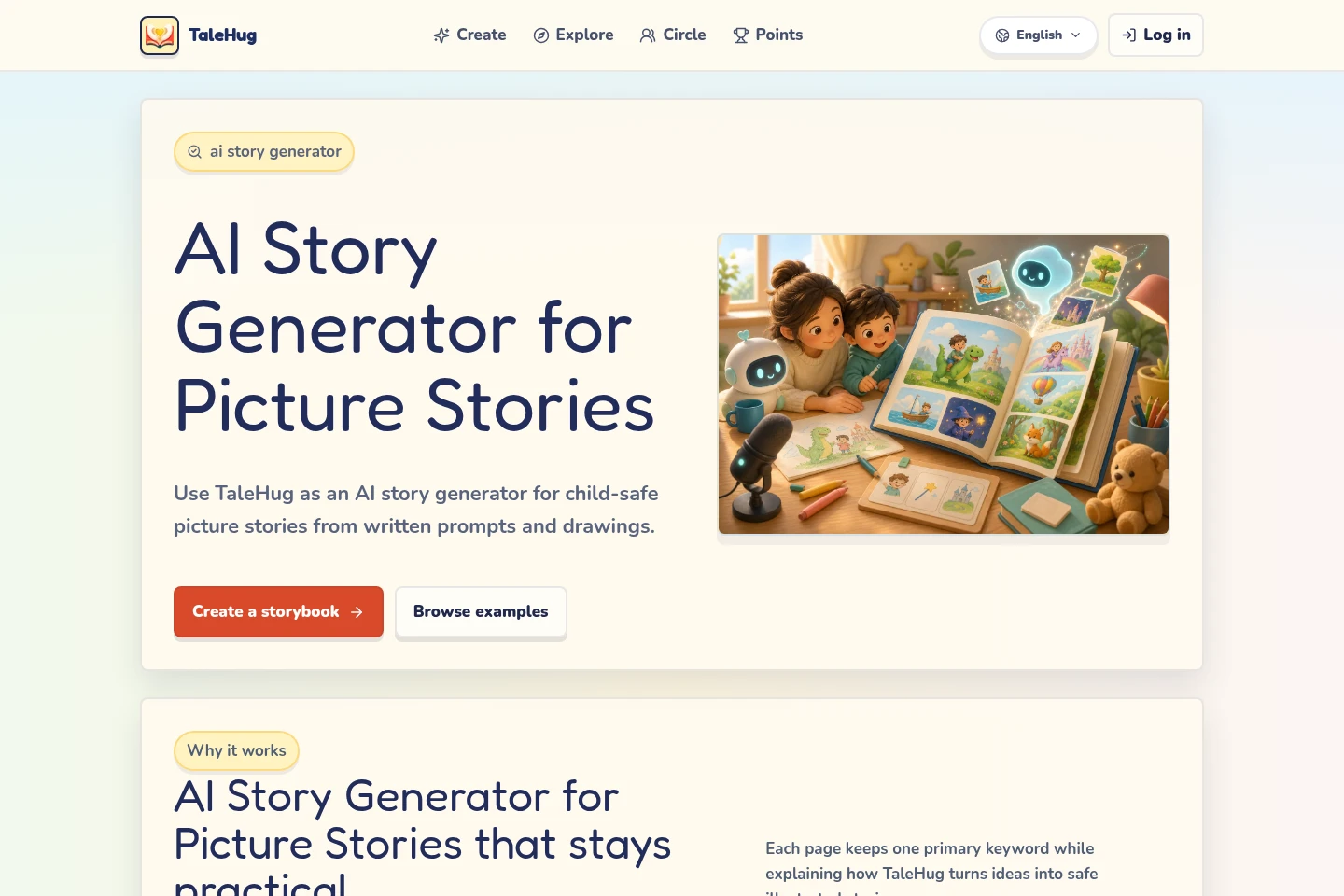
TaleHug turns a child's written idea, uploaded drawing, or parent-approved prompt into a short illustrated AI storybook. Stories contain 4–10 pages, with a strong image and a short sentence on each page. Drafts are private by default; an adult reviews stories before circle or public sharing.
- AI Writing
- Storybook Generators
- Image Generators
- AI story generator for kids
- drawing to storybook
- illustrated children's stories
Capabilities
Idea-to-storybook generation
Creates a short illustrated storybook from a written idea, drawing, or parent-approved prompt. Each page combines a strong image with one short sentence, and stories are planned as 4–10 pages.
Page image generation
Generates picture pages from text prompts or drawing references. Users can choose text or image inputs; higher image resolutions and other generation modes consume more credits.
Draft and sharing controls
Keeps new drafts private and offers private, circle, and public visibility choices. An adult must review stories before circle or public publishing; public comments are unavailable in the MVP.
Story prompt regeneration
Stores a prompt for each generated page so the image can be regenerated. The saved page prompt is used as the input for another generation, which consumes credits.
Pricing
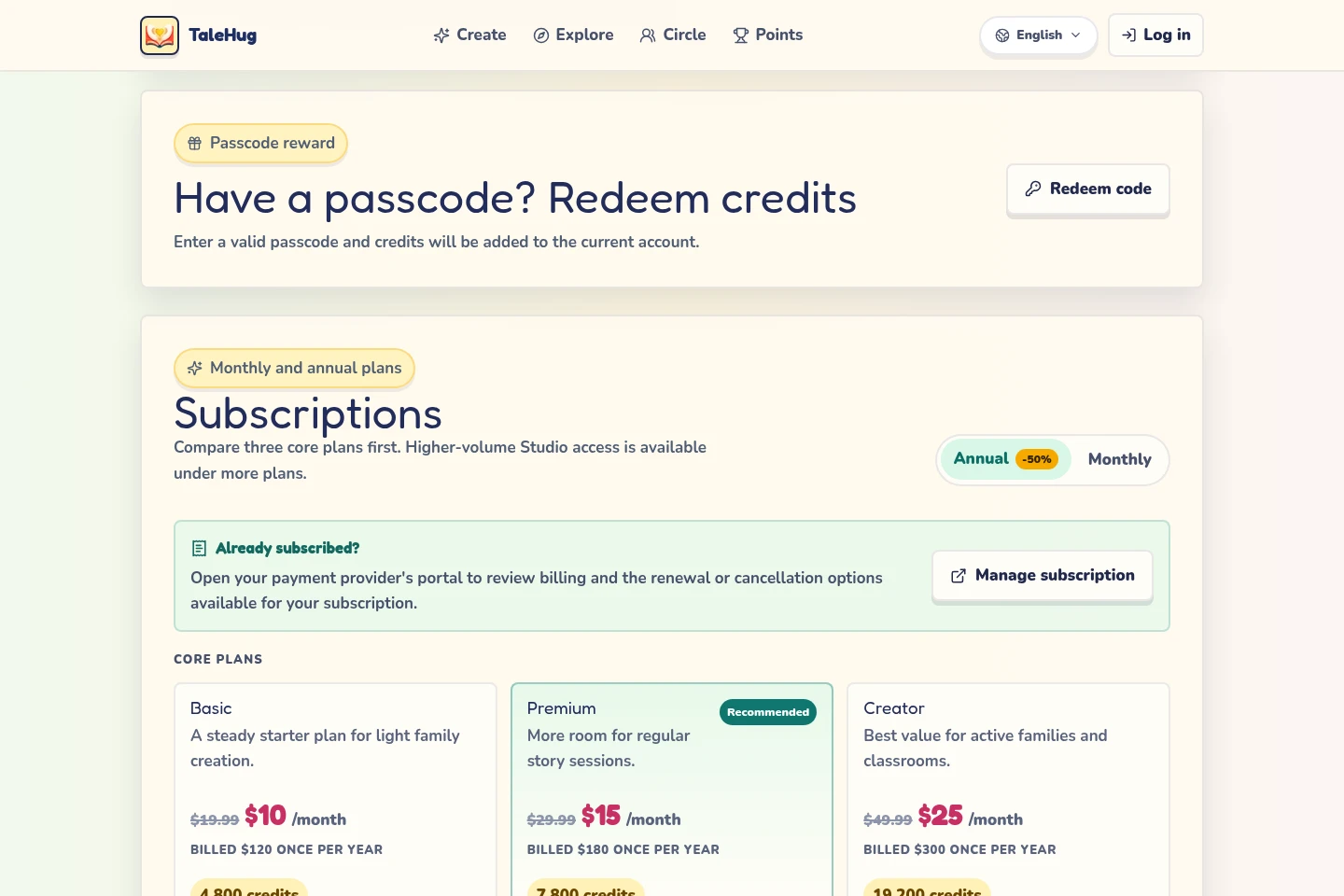
TaleHug offers recurring monthly or annual subscriptions and separate one-time credit packs. Compare included credits and the generation modes you need; annual subscriptions are billed once per year.
| Plan | Price | Included features and limits |
|---|---|---|
| Basic | $10/month; $120 billed annually |
|
| Premium | $15/month; $180 billed annually |
|
| Creator | $25/month; $300 billed annually |
|
| Studio | $50/month; $600 billed annually |
|
| Starter pack | $50 one time |
|
| Family pack | $100 one time |
|
| Project pack | $200 one time |
|
| Studio pack | $500 one time |
|
Cover estimates assume one credit per standard 1K cover. Higher resolutions and other generation modes use more credits. The site also advertises a passcode reward of 10 credits once per account.
Use cases
Create a short story for co-reading
When a family has a small story idea to read together, enter a written prompt or choose a parent-approved prompt. TaleHug creates a short picture storybook with page images and simple sentences for co-reading.
Turn a child's drawing into a story
When a child has made a drawing they want to build on, upload it as a visual reference. TaleHug uses the drawing in the story-generation workflow to produce an illustrated, page-by-page storybook.
Review a story before sharing
When a family wants to share a generated story, keep the draft private while reviewing it. An adult can then choose circle or public visibility; public publishing requires adult review.
Limitations
Storybooks are designed for 4–10 pages; the pages describe short picture stories rather than unrestricted long-form fiction.
Circle and public publishing require adult review; drafts are private by default.
Public comments are not available in the MVP.
Higher image resolutions and other generation modes use more credits than the estimate of one credit per standard 1K cover.
Who it is for
Families creating short, parent-guided picture stories for young children
Preschool and kindergarten educators preparing short illustrated prompts for children
FAQ
What can TaleHug use to start a story?
A written idea, an uploaded drawing, or a parent-approved prompt can start a story. TaleHug turns that input into a short illustrated storybook.
How long are the storybooks?
Storybooks are designed to have 4–10 pages. Each page has a strong image and one short sentence.
Are stories public when they are created?
No. Drafts are private by default. Circle or public sharing is a separate choice and requires adult review.
Can a page image be generated again?
Yes. TaleHug stores a prompt for each page for regeneration. Generating images uses credits, and higher resolutions or other modes use more credits.
How do credit subscriptions and one-time packs differ?
Subscriptions recur monthly or annually, while credit packs are separate one-time purchases without recurring billing. Credit use varies with resolution and generation mode.
Comments