

- Monthly visits
- 0
- 2026-09
- Monthly growth -100%
Crystal Scanner - Identify crystals and minerals from photos with AI
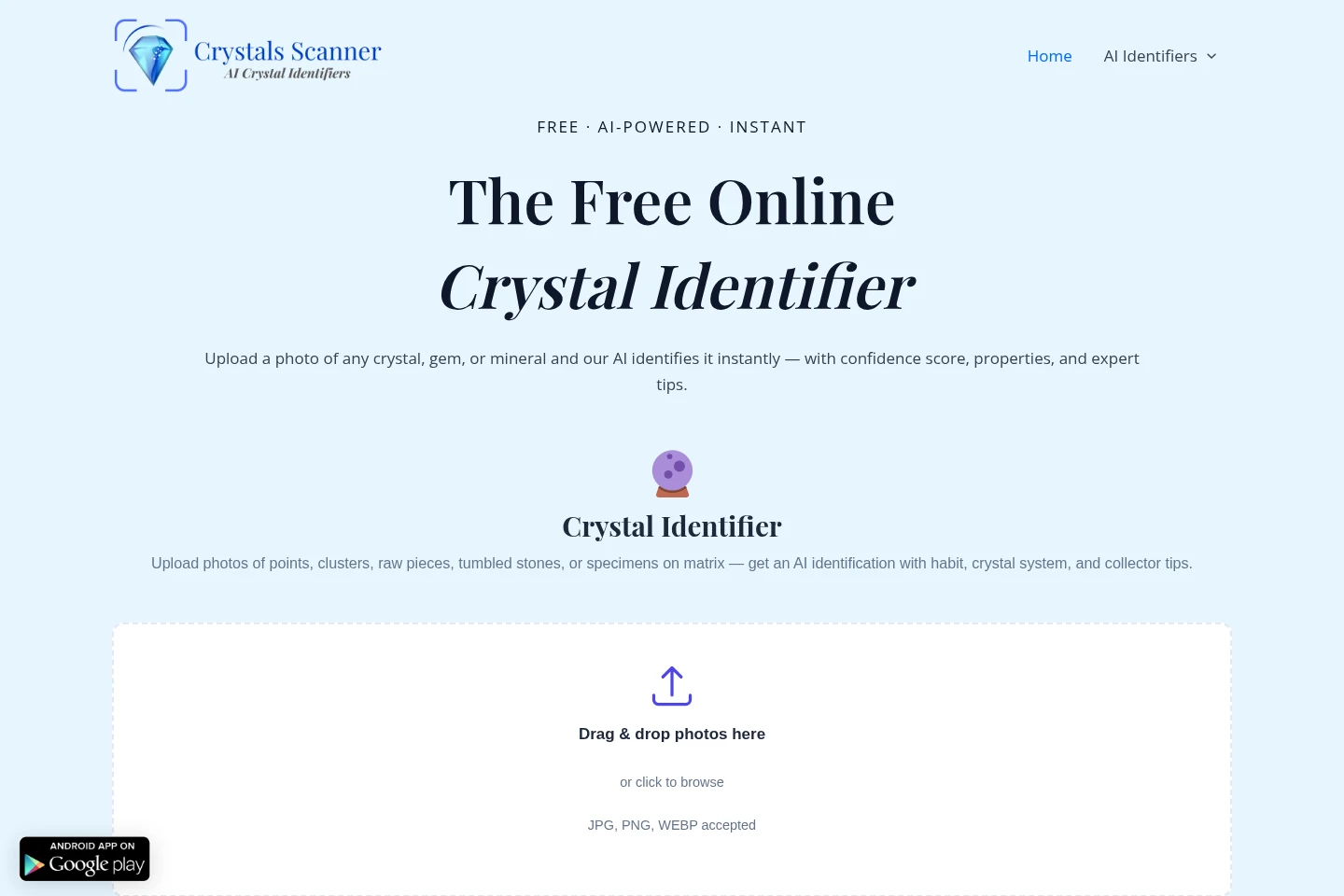
Crystal Scanner is a free online tool for identifying crystals, gemstones, rocks, and minerals from uploaded photos. It accepts up to three JPG, PNG, or WEBP images and optional specimen details such as locality, size, hardness, magnetism, and luster. Results can include identification confidence, properties, formation, rarity, relative value, and similar specimens.
- AI Image
- Image Recognition
- AI crystal identifier
- gemstone photo identification
- mineral scanner
Capabilities
Photo specimen identification
Identifies crystals, gems, rocks, and minerals from uploaded specimen photos and returns a likely name with a confidence percentage. Accepts JPG, PNG, and WEBP; users can submit up to three angles and add optional physical context.
Specimen property analysis
Provides information about an identified specimen, including properties, formation, hardness, luster, rarity, relative value, and notable localities where available. The result may also show alternative and similar identifications.
Context-assisted identification
Uses optional specimen details to help narrow identification candidates and displays a confidence score. Users can enter locality, approximate size, glass-scratch result, magnetism, luster, and other notes up to 200 characters.
Pricing
Crystal Scanner is free to use, with no sign-up required. The site presents the photo-identification tools as free and does not list paid plans or recurring charges.
| Plan | Price | Included features and limits |
|---|---|---|
| Free | Free; $0 |
|
Use cases
Identify an unknown crystal specimen
When a collector finds or receives an unidentified crystal, they can upload one to three photos and optionally add physical details. Crystal Scanner returns a suggested identification, confidence percentage, and related specimen information.
Screen an unfamiliar gemstone or imitation
When someone wants an initial indication of a gemstone's identity, they can use the Gemstone Identifier or a relevant stone tool with a photo. Results may include value or authenticity notes, but high-value stones should be confirmed by professional laboratory testing.
Review a mineral specimen's properties
When a user wants more context about a photographed mineral or rock, they can submit images and optional observations. The result can present properties such as hardness and luster, formation details, rarity, relative value, and similar candidates.
Limitations
The tool accepts JPG, PNG, and WEBP photos, with a maximum of three images for one identification.
High-value gemstone results are not a substitute for professional laboratory testing or certification.
The homepage describes photo-based screening and estimates; it does not establish a laboratory-confirmed identification.
Who it is for
Crystal and mineral collectors seeking photo-based specimen identification
People checking the likely identity of an unfamiliar gemstone or stone
Rock and mineral hobbyists who want specimen properties and identification clues
FAQ
How accurate is AI crystal identification from a photo?
The site states 90–95% accuracy for common crystals and 70–85% for rarer specimens. It says multiple angles and physical details can improve accuracy, and the result displays a confidence percentage.
Can I identify crystals by photo for free?
Yes. Crystal Scanner says the tool is free and requires no sign-up. Users upload a photo, may add physical details, and receive an identification result with specimen information.
What is the difference between a crystal and a mineral?
The site explains that crystals have an ordered repeating atomic structure, while minerals are defined by their chemical composition and crystal structure. Its identifier covers both.
How should I photograph a crystal for identification?
Use natural daylight and a plain white or black background, and avoid flash glare. The site recommends top, side, and close-up views; up to three photos can be uploaded.
Can this tool identify gemstones and precious stones?
Yes. The Gemstone Identifier covers precious and semi-precious stones, including diamonds, rubies, sapphires, emeralds, amethyst, turquoise, and agate. The site recommends professional lab testing for high-value stones.
Comments