

- Monthly visits
- 21,114
- 2026-10
- Monthly growth +8.9%
AMOGA - Governed enterprise applications built around approved specifications
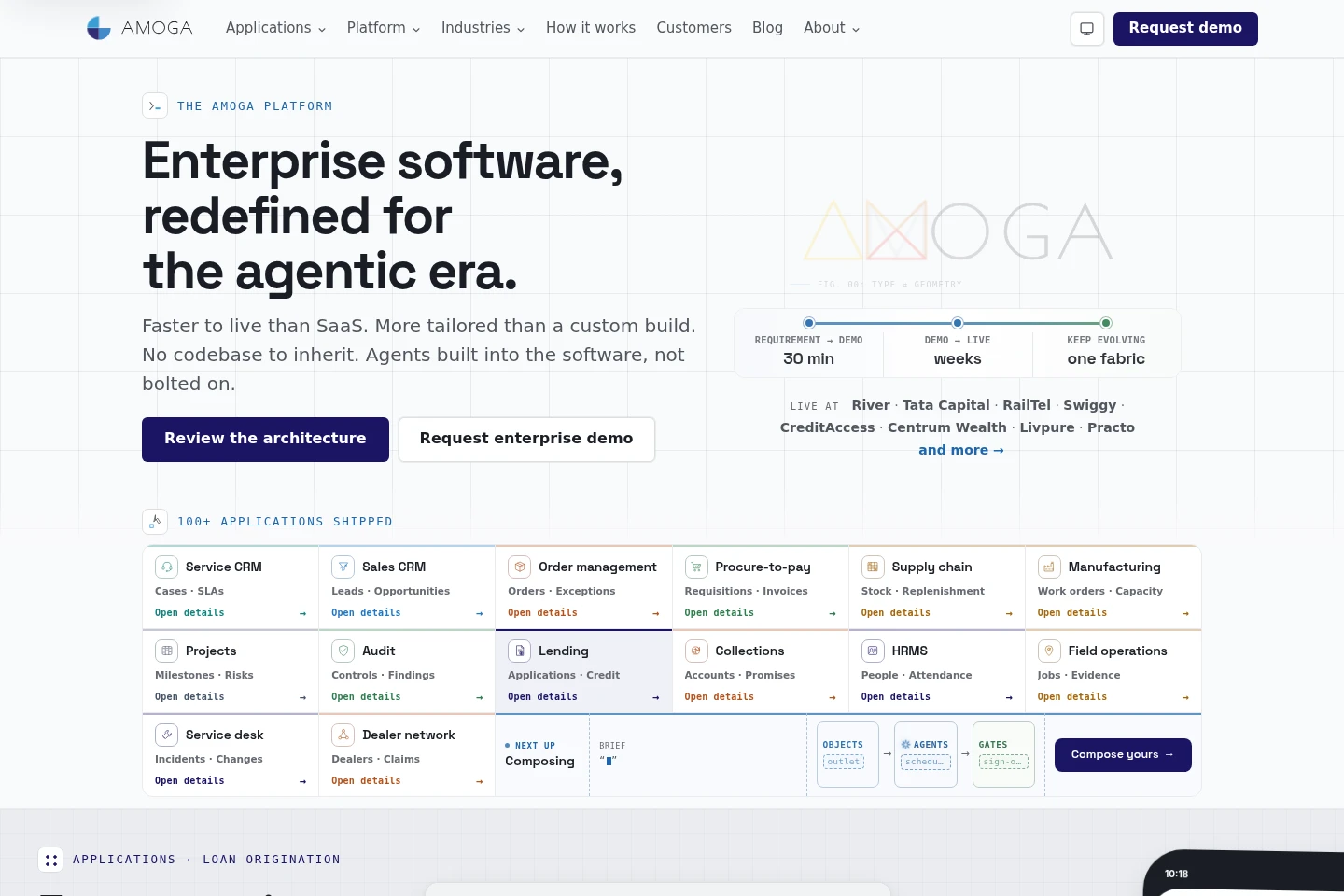
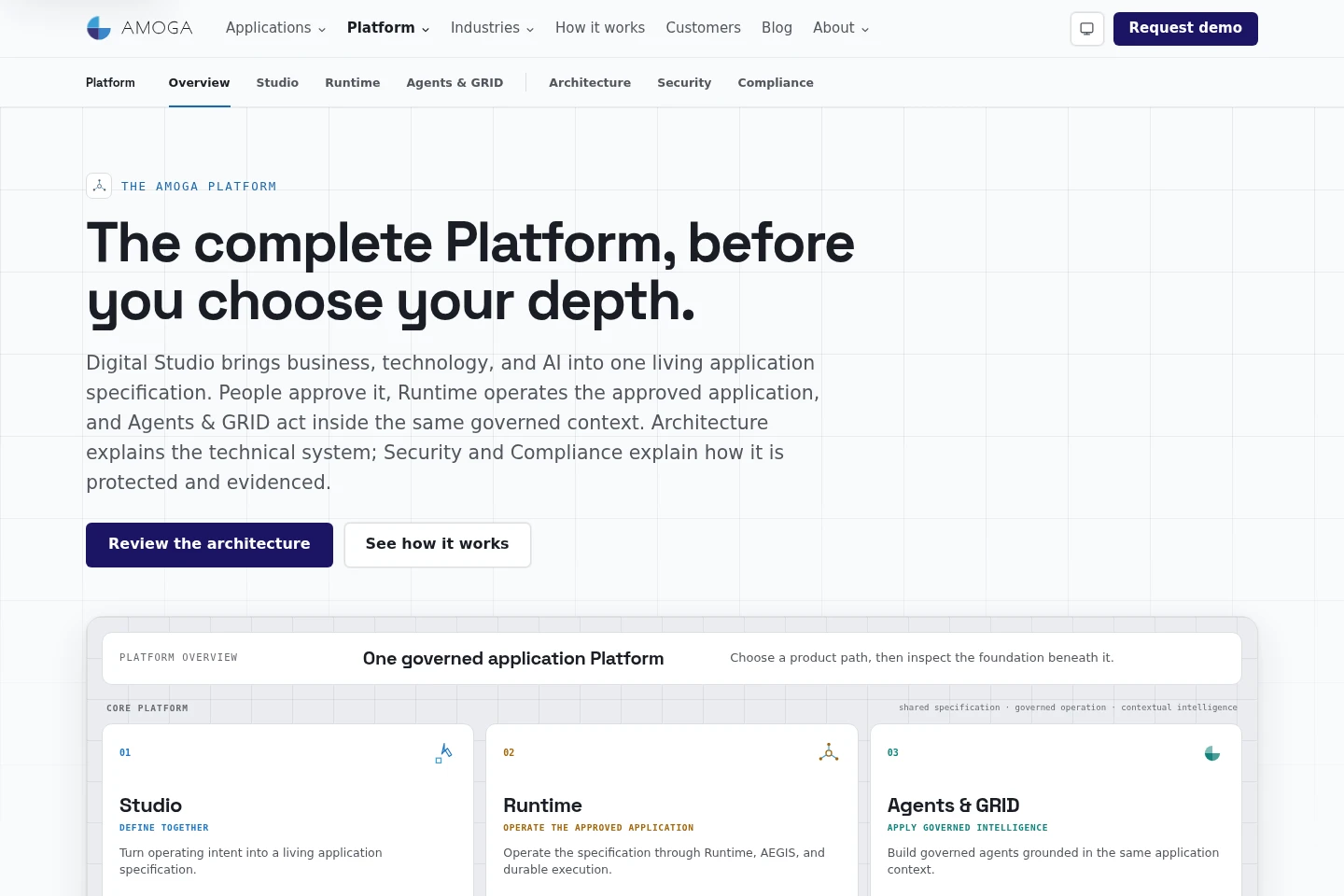
AMOGA is an enterprise application platform combining Studio, Runtime, and Agents & GRID around a shared application specification and authority model. Teams define operating workflows, approve specifications, and run them through durable execution. Its application examples include CRM, lending, HRMS, inventory, manufacturing, and field operations.
- AI Coding
- Internal Tool Builders
- Workflow Automation
- Agent Builders
- Education
- Healthcare
- Finance
- Retail
- Manufacturing
- enterprise application platform
- governed AI agents
- workflow application builder
Capabilities
Application specification design
Studio turns operating intent into a living application specification. Teams define the specification together, and a named owner approves it before Runtime operates the approved application.
Durable application runtime
Runtime operates approved application specifications through durable execution. It supports persistent workflows and is presented as connected to AEGIS, with deployment boundaries, observability, and resilience described in the platform architecture.
Governed enterprise agents
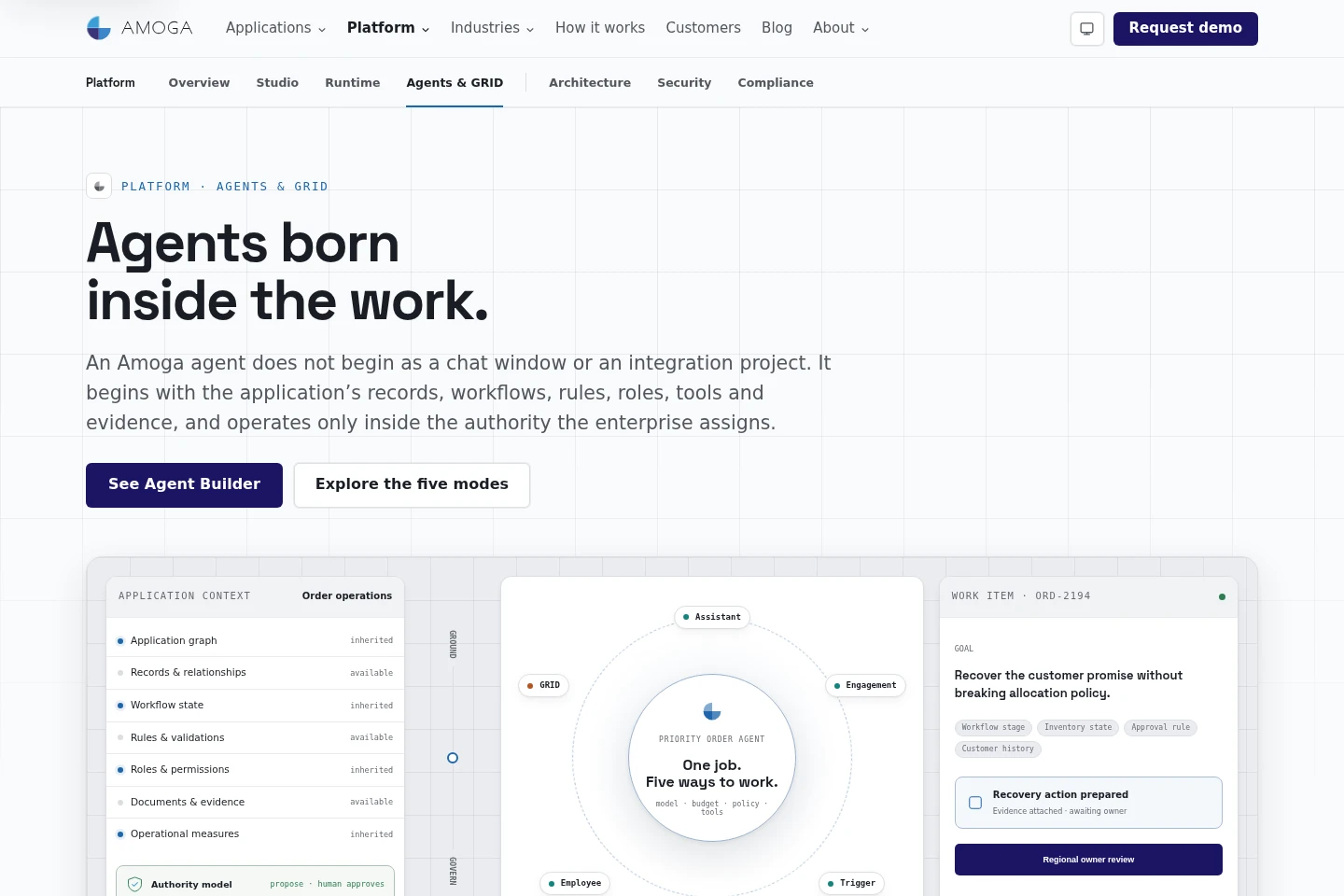
Agents & GRID let teams build agents grounded in the same application context. The platform describes agent types for assistance, engagement, triggers, and employees, with governed actions and human decision authority.
Enterprise application workflows
AMOGA provides application examples for business processes, including CRM, loan origination, HRMS, field operations, order management, production planning, and inventory. Workflows can use records, roles, decisions, exceptions, and connected systems.
Pricing
Pricing and payment terms are not stated in the supplied pages. Compare plan availability, prices, included capabilities, and billing conditions directly with AMOGA before selecting an offering.
Use cases
Define and run an enterprise workflow
When an organization needs an application for an operating process, teams use Studio to turn intent into a specification, have an owner approve it, and run the approved specification through Runtime.
Manage loan origination and disbursement
For lending operations moving an application toward sanction and disbursement, the loan origination example assembles information through agents while officers retain sanction decisions.
Coordinate omnichannel customer service
When service requests arrive through multiple channels, Service CRM links them to a customer record, drafts triage and responses with cited policy or evidence, and tracks SLA escalation while people resolve and approve cases.
Who it is for
Enterprise process owners defining governed operational workflows
Enterprise application teams coordinating specifications, runtime, and agents
Operations teams managing lending, service, workforce, inventory, or production processes
FAQ
How are applications defined and approved?
Teams use Studio to create a living application specification from operating intent. A named owner approves the specification before Runtime operates the application.
What do Agents & GRID do?
Agents & GRID support building governed agents grounded in application context. The platform identifies Assistant, Engagement, Trigger, Employee, and GRID agents; human authority and approval checkpoints remain part of described workflows.
Can AMOGA support lending workflows?
Yes. The Loan origination & disbursement application example covers movement from application to sanction to disbursement. Agents assemble information, while officers make sanction decisions.
How does Service CRM handle service requests?
Service CRM brings email, chat, WhatsApp, voice, and social interactions into a customer thread. Its triage agent drafts with cited policy, and SLA escalation is tracked while people resolve cases.
Comments