

- Monthly visits
- 1,604
- 2026-09
- Monthly growth -4.9%
AI Code Translator - Translate code snippets, generate Python, and explain code
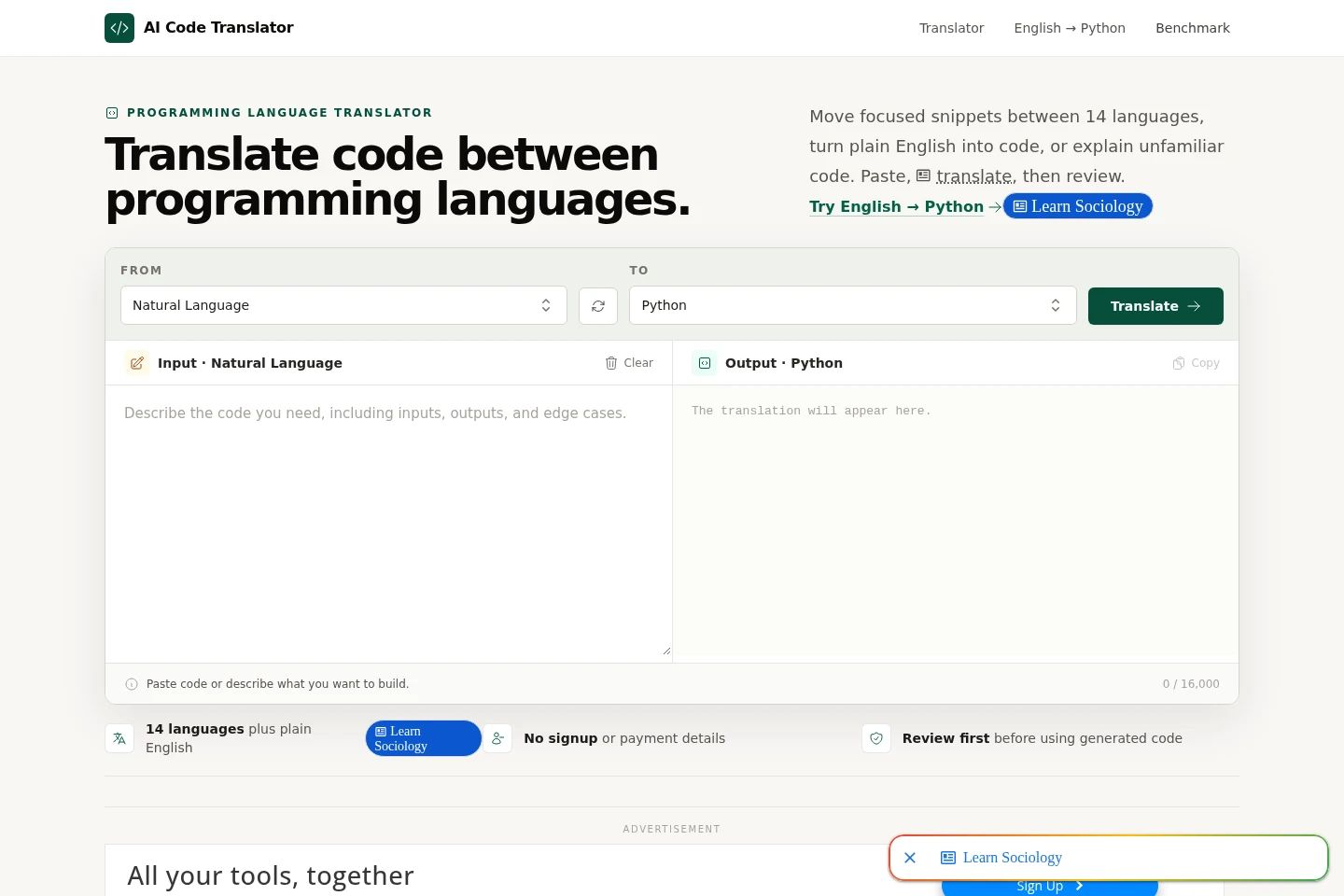
AI Code Translator is a browser workspace for translating focused code snippets among 14 programming languages, turning plain-English requests into Python, and explaining unfamiliar code. Review generated output before use: libraries, types, runtime behavior, and project requirements may need changes. The service is free and does not require signup or payment details.
- AI Coding
- Coding Assistants
- Translators
- Software
- AI code translator
- English to Python
- code snippet conversion
Capabilities
Translate code snippets
Translate a focused code snippet between the programming languages available in the workspace. Choose source and target languages, submit the snippet, then review the output because libraries, types, and runtime behavior may not map directly.
Convert English to Python
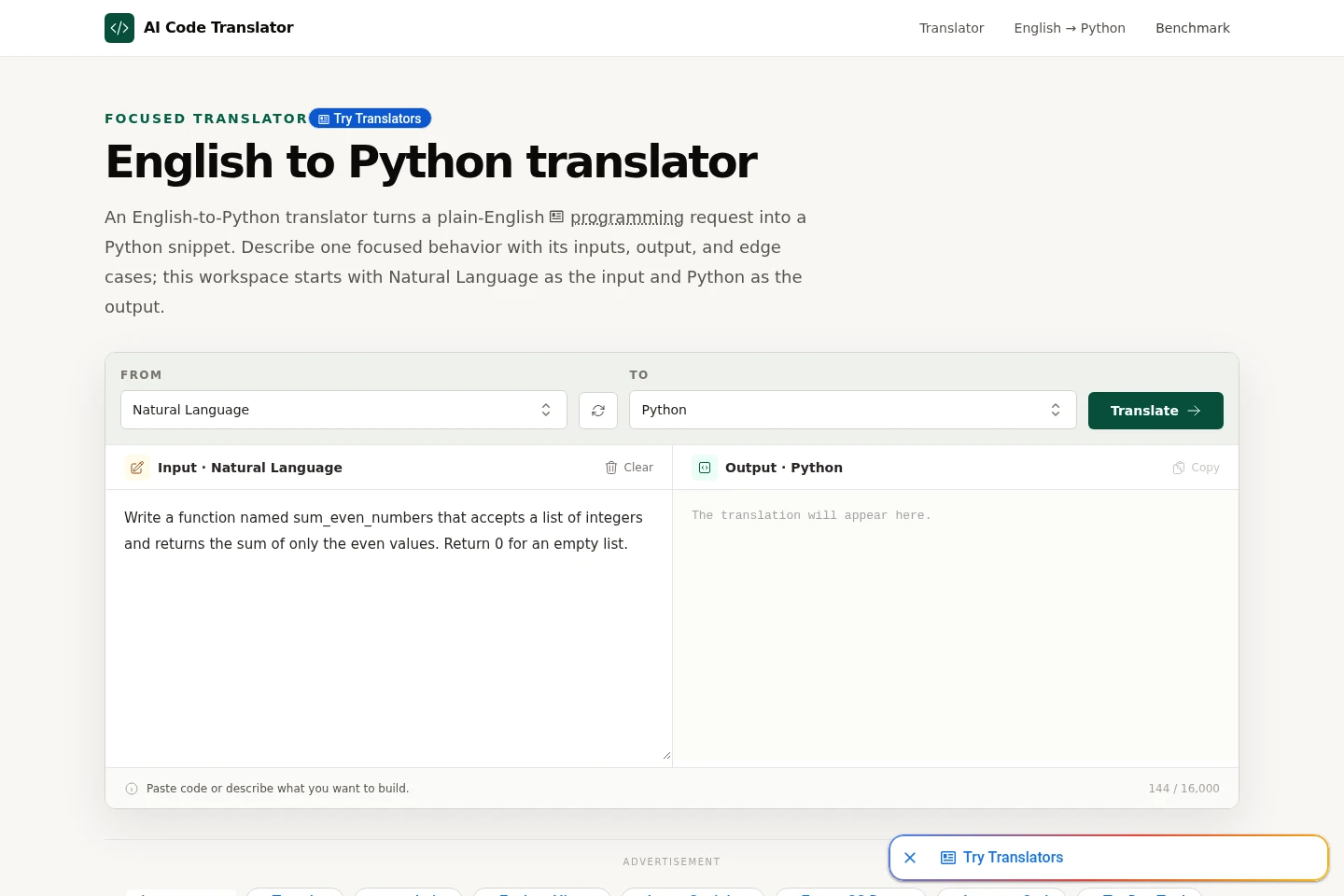
Turn a plain-English programming request into a Python snippet. Describe one focused behavior, including inputs, outputs, constraints, and edge cases; generated code is a draft that should be inspected and tested.
Explain unfamiliar code
Provide an explanation of a code snippet to help understand it. The general workspace supports a plain-English input or output, and the explanation should be checked against the source and its project context.
Pricing
The service is free to use without signup or payment details. There are no listed paid plans to compare; use the workspace’s supported languages and focused translation workflows to choose the appropriate task.
Use cases
Translate a focused code snippet
When adapting a function or small piece of code for another programming language, select the source and target languages and submit the snippet. Inspect dependencies, types, error handling, and target-language conventions, then test the result in your project.
Draft a Python function from English
When a programming task is described in plain English, state the function’s inputs, expected output, constraints, and edge cases in the English-to-Python workspace. Review dependencies and types, then run the generated snippet and project-specific tests.
Understand an unfamiliar code snippet
When encountering code in an unfamiliar language, provide a focused snippet and request a plain-English explanation in the general workspace. Compare the explanation with the code and verify behavior in the surrounding project before relying on it.
Limitations
Language availability in the interface does not guarantee that every library or runtime behavior has a direct equivalent.
Generated code may need changes for the project’s Python version, installed packages, caller expectations, data shapes, or operating system.
The site recommends focused snippets or functions because complete project specifications are harder to verify; generated results need review and tests.
Who it is for
Developers adapting focused snippets between programming languages
People turning a clearly specified programming task into a Python draft
Developers seeking a plain-English explanation of unfamiliar code
FAQ
Which programming languages can I translate?
The workspace lists Python, JavaScript, TypeScript, Java, C++, Go, Rust, PHP, Ruby, Swift, Kotlin, C#, SQL, and Shell. Plain English is also available as input or output; listed language support does not guarantee direct library or runtime equivalents.
Can I turn English instructions into Python?
Yes. Use the English-to-Python workspace with a focused request describing inputs, output, constraints, and edge cases. Inspect the generated snippet and run it with project-specific tests before using it.
Does generated code run without changes?
Not always. Python versions, installed packages, caller expectations, data shapes, and operating-system behavior can require changes. Treat the output as a draft, inspect it, and test it in your own project.
How should I check translated code?
Review types, dependencies, error handling, tests, and target-language conventions before use. Also check file, network, database, subprocess, and secret-handling operations in context when they appear.
Comments