


Mito - AI-powered Jupyter Notebook for Excel and database automation
Launched on Feb 23, 2025Mito transforms Jupyter into a powerful data tool with Excel-like spreadsheet interface and AI assistance. Write Python 4x faster, automate Excel workflows, and connect to 20+ databases. Enterprise-grade privacy ensures data stays local with no cloud uploads.
What Is Mito
If you spend hours every week manually updating Excel reports, or if you've always wanted to learn Python but feel intimidated by coding, Mito might be exactly what you need. This enterprise-grade Jupyter Notebook extension transforms how data teams work with Python, making it accessible, faster, and more secure.
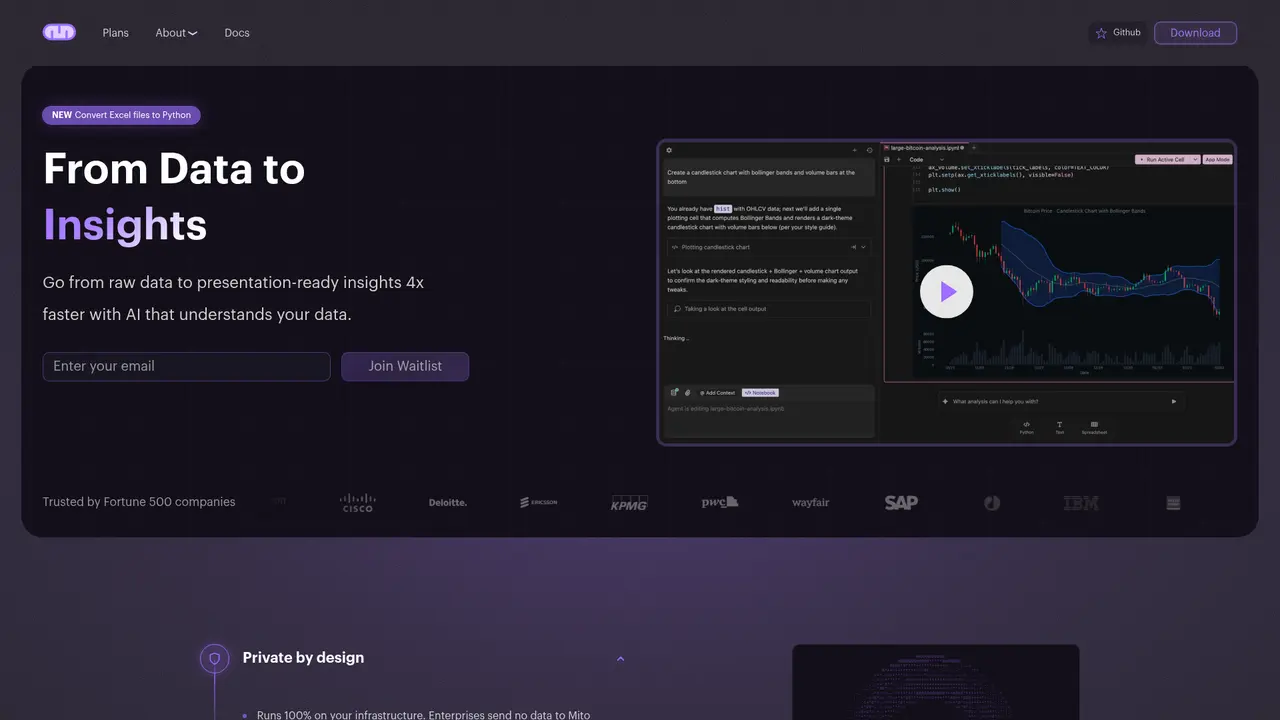
Mito is an AI-powered programming assistant that runs directly inside your Jupyter environment. Instead of writing code from scratch, you can work with data using a familiar Excel-style interface—complete with spreadsheets, formulas, and pivot tables. Every action you take automatically generates production-ready Python code. The result? You can write Python code four times faster while maintaining full control over your data.
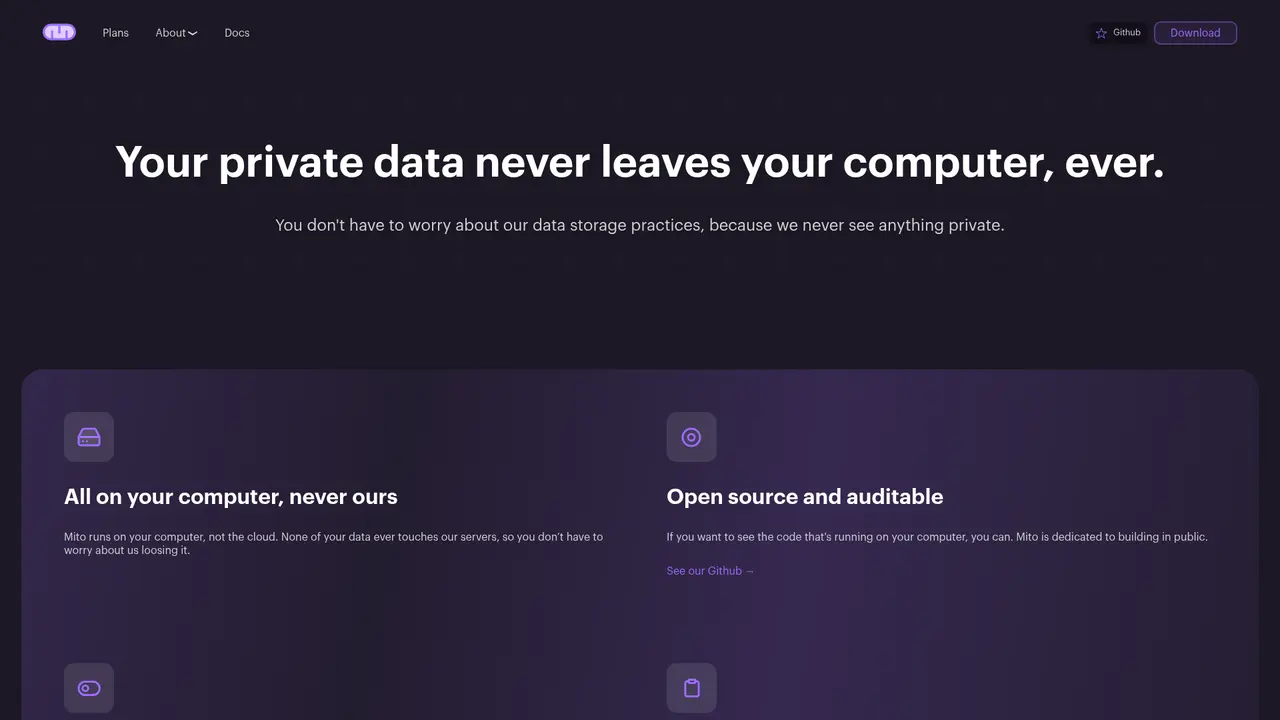
What sets Mito apart is its commitment to data privacy. Your data never leaves your local environment. Whether you're working with sensitive financial records or proprietary research data, Mito operates entirely on-premises. You can even connect your own LLM (Large Language Model) for AI-powered features, ensuring that no external AI services access your confidential information.
The platform has earned the trust of Fortune 500 companies worldwide. Industry leaders including Accenture, Amazon, Cisco, Deloitte, Ericsson, KPMG, PwC, Wayfair, SAP, Cytiva, IBM, and Wells Fargo rely on Mito for their data workflows. This widespread adoption among enterprises with the most stringent data requirements speaks to both the platform's capability and its security.
Mito is developed by Saga, Inc., a company backed by Y Combinator, and its source code is available on GitHub. This means you can inspect the code, contribute to its development, and verify its security practices yourself.
:::card{type="summary" title="TL;DR"}
- AI Programming Assistant: Context-aware AI that understands your data and generates Python code automatically
- Excel-Style Interface: Work with spreadsheets, formulas, and pivot tables without writing code
- 20+ Database Connections: Direct access to BigQuery, Snowflake, Redshift, PostgreSQL, and more
- Enterprise-Grade Privacy: 100% local data processing, optional self-hosted LLM, no data leaves your environment :::
---
Mito's Core Features
Mito offers a comprehensive suite of features designed to streamline your data workflow. Here's how each feature can help you work more efficiently.
Jupyter Agent (AI Assistant)
The Jupyter Agent is Mito's AI-powered programming assistant that understands your data and automatically updates your notebook. Built on advanced LLM technology, it can query APIs, generate code, and assist with数据分析 tasks. Users consistently report achieving four times faster coding speed compared to traditional approaches. Whether you're performing exploratory data analysis or building automated pipelines, the Jupyter Agent handles the heavy lifting while you focus on insights.
Excel-like Spreadsheet
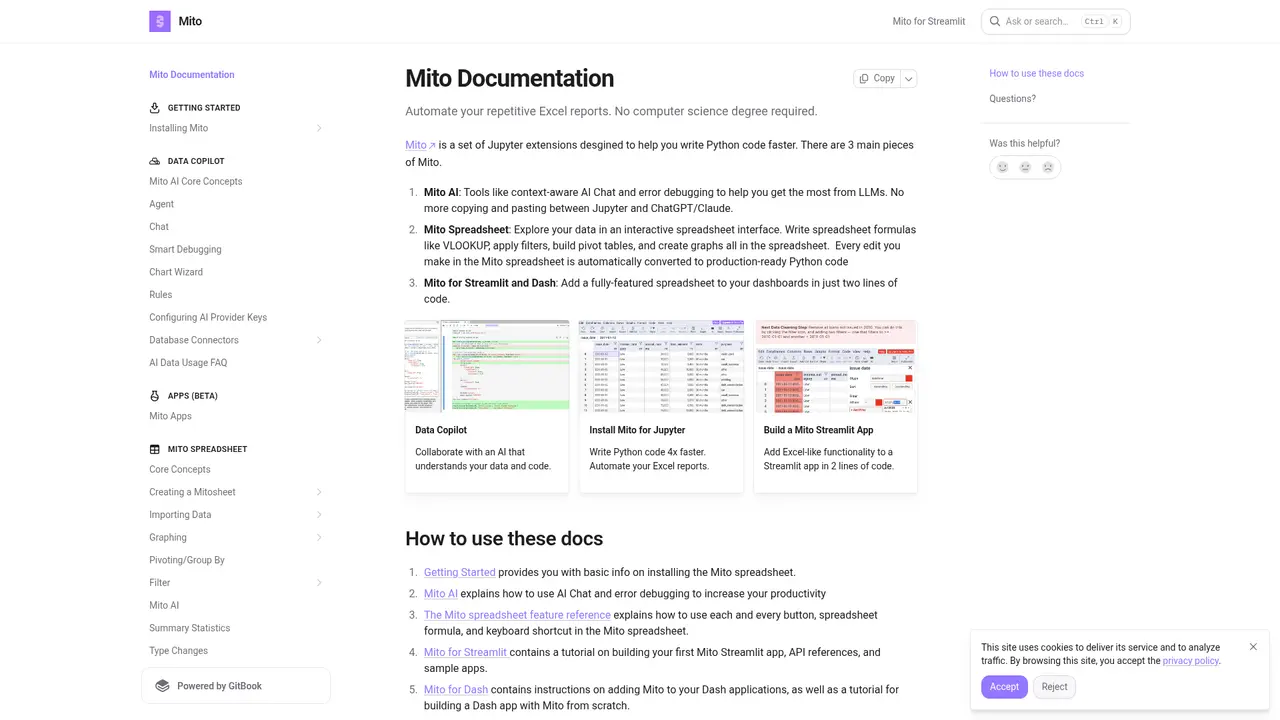
One of Mito's most popular features is the spreadsheet interface that works directly inside Jupyter. You can use familiar Excel operations—formulas, VLOOKUP, pivot tables, filtering, and charting—without leaving your notebook. The magic happens in the background: every edit you make automatically converts to production-grade Python code. This means you get the best of both worlds: the ease of spreadsheet interaction and the power of Python automation.
Chart Wizard
Creating visualizations shouldn't require memorizing matplotlib syntax. The Chart Wizard lets you generate professional plots through a point-and-click interface, then exports the underlying Python code so you can customize or reproduce it later. Built on Plotly, the charts are interactive and publication-ready.
Auto Error Correction
When your code breaks, Mito helps you fix it fast. The Auto Error Correction feature identifies issues and explains what went wrong, then provides a one-click fix. This dramatically reduces debugging time, especially for users still learning Python.
Database Connections
Mito connects directly to over 20 databases, including BigQuery, Snowflake, Redshift, PostgreSQL, MySQL, SQL Server, Oracle, MongoDB, and Databricks. Run SQL queries directly from your notebook, visualize results instantly, and build repeatable analysis workflows on top of your enterprise data warehouse.
App Builder (Streamlit/Dash)
Want to share your analysis with the team? Mito's App Builder converts your notebook into a Streamlit or Dash application with just two lines of code. This enables rapid prototyping of data apps, dashboards, and interactive tools without requiring a separate development workflow.
Low-Code SQL
Not everyone on your team needs to be a SQL expert. The Low-Code SQL interface lets non-technical users query databases through a visual query builder. Select tables, choose columns, apply filters, and execute—all without writing complex queries.
Mito AI - Data Copilot
Mito AI acts as your data analysis partner, understanding both your data and your code. It provides context-aware chat assistance, helps debug errors, and accelerates exploratory data analysis, visualization, and feature engineering. The more you work with it, the better it understands your specific workflow.
::::grid :::card{type="advantages"}
- 4x Faster Coding: AI assistance helps you write Python code four times faster than traditional methods
- Local Data Privacy: All processing happens on your machine—data never leaves your environment unless you choose to share it
- Excel to Python Bridge: Convert existing Excel workflows into automated Python scripts without learning complex programming
- Enterprise Ready: SOC 2 ready architecture with support for self-hosted LLMs and complete audit trails
- Seamless Integration: Works natively in JupyterLab, Jupyter Notebook, JupyterHub, and SageMaker ::: :::card{type="disadvantages"}
- Requires Jupyter Environment: Must have Jupyter installed (though this is standard for data teams)
- Learning Curve for Non-Technical Users: While easier than raw Python, some features still require understanding data concepts
- Initial Setup Time: Enterprise deployments may need IT configuration for database and LLM integrations ::: ::::
---
Who Uses Mito
Mito serves a diverse range of users, from individual analysts to large enterprise teams. Here are the most common scenarios where Mito delivers significant value.
Excel Report Automation
If you spend hours each week manually updating Excel reports, you're not alone. Many analysts face the tedious task of copying data, applying formulas, and generating the same reports week after week. With Mito, you complete the workflow once, and it generates a reusable Python script. Run it whenever you need fresh data—no more repetitive manual work. The automation eliminates human error and saves hours every week.
Python Learning and Training
Business professionals often want to leverage Python's capabilities but feel discouraged by the coding barrier. Mito's Excel-style interface lets you start programming immediately without memorizing syntax. As you work, you see the Python code being generated, which naturally teaches you Python fundamentals. Many teams use Mito as a training tool, helping non-technical staff become productive in Python four times faster.
Enterprise Data Analysis
Enterprise data often lives across multiple databases—customer data in Snowflake, financial records in Redshift, and operational metrics in PostgreSQL. Writing complex SQL queries to join these sources requires specialized skills. Mito provides a visual query interface that lets you connect to 20+ databases, explore schemas, and build queries without being a database expert. This unifies your data access and dramatically improves analytical efficiency.
Data Application Development
When you need to share insights with stakeholders who don't use Jupyter, building a dashboard usually requires a separate development effort. Mito's App Builder transforms your notebook into a Streamlit or Dash application in just two lines of code. Your analysis becomes an interactive tool that anyone on your team can access through a browser.
Financial Services Analytics
Financial institutions handle highly sensitive data subject to strict regulatory requirements. Mito addresses these concerns through its 100% local deployment option. Data never leaves your network, and you can integrate self-hosted LLMs for AI-powered features. This enables financial teams to improve productivity while maintaining full compliance with data protection regulations.
Life Science Research
Researchers in pharmaceuticals and biotechnology often process large volumes of experimental data. Rather than spending time on data manipulation, they need to focus on scientific insights. Mito automates data processing workflows, allowing researchers to concentrate on what they do best—science.
:::card{type="tip" title="💡 Choosing the Right Plan"} If you're in a regulated industry like finance or healthcare, consider starting with Mito Enterprise. The self-hosted AI option ensures complete data sovereignty, and the included onboarding program helps your team get up to speed quickly with best practices for your specific use case. :::
---
Quick Start
Getting started with Mito takes just a few minutes. Follow these steps to begin your first AI-powered data workflow.
Installation
Mito installs via pip, Python's package manager. Open your terminal and run:
``` pip install mitoinstaller ```
Then launch the installer:
``` python -m mitoinstaller ```
This single command installs Mito and its dependencies, then automatically configures your Jupyter environment.
Supported Environments
Mito works with the most popular Jupyter platforms:
- JupyterLab (recommended for new projects)
- Jupyter Notebook (classic interface)
- JupyterHub (multi-user environments)
- Amazon SageMaker (cloud-based Jupyter)
- Streamlit (for embedded spreadsheet functionality)
- Dash (for building data applications)
As long as you have Python 3.8 or higher and a Jupyter environment, you're ready to go.
Your First Mito Spreadsheet
After installation, open Jupyter and create a new notebook. Mito automatically adds a spreadsheet interface to your notebook. Click on the spreadsheet to start working—you can import data, apply formulas, create pivot tables, and generate charts just like in Excel. Watch the Python code appear in cells below as you work. That's your automation script being built in real time.
:::card{type="tip" title="💡 Best Practices"} We recommend using a virtual environment for Mito installation to avoid conflicts with other Python packages. If you're new to Python, tools like conda or venv make this easy. This keeps Mito and its dependencies isolated from your other projects. :::
---
Mito Pricing
Mito offers three pricing tiers to match different needs, from individual users to large enterprises.
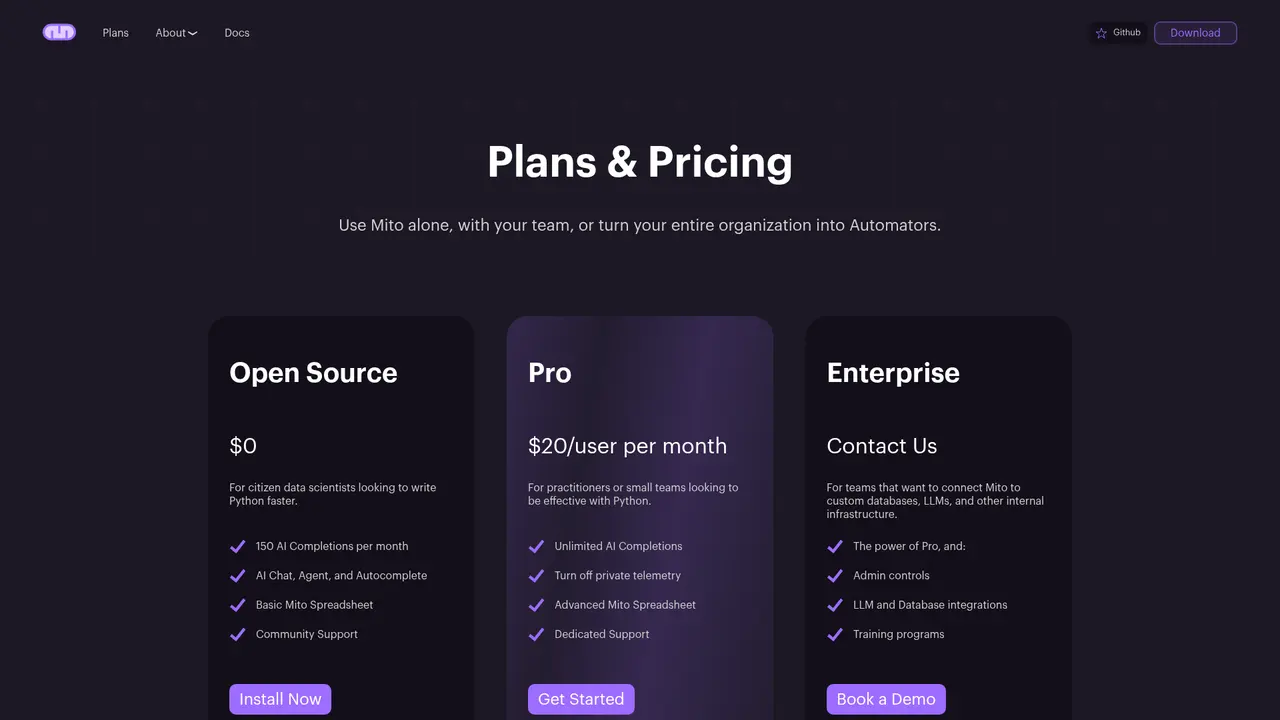
| Plan | Price | Core Features | Best For | |------|-------|---------------|----------| | Open Source | Free | 150 AI completions/month, AI Chat, Agent, Autocomplete, Basic Spreadsheet, Community support | Individual analysts, learning Python, small projects | | Pro | $20/user/month | Unlimited AI completions, All telemetry disabled, Advanced Spreadsheet (conditional formatting, styling), Priority support | Professionals, teams needing privacy, high-volume users | | Enterprise | Contact Sales | Admin controls, LLM and database integrations, Training programs, Self-hosted AI (On-prem), Success manager, Onboarding program | Large organizations, regulated industries, custom deployments |
The Open Source version provides substantial functionality for learning and small projects. Pro removes usage limits and disables all telemetry for users with strict privacy requirements. Enterprise includes dedicated support, custom integrations, and the ability to run AI features entirely on your infrastructure.
---
Frequently Asked Questions
:::card{type="faq" title="Is Mito open source?"} Yes, Mito is an open-source project. The code is available on GitHub at github.com/mito-ds/mito. You can inspect the source code, report issues, and contribute to the project's development. The open-source model ensures transparency and allows security-conscious organizations to verify the code themselves. :::
:::card{type="faq" title="Is Mito free?"} Mito offers a free Open Source version with 150 AI completions per month, basic spreadsheet functionality, and community support. The Pro version costs $20 per user per month and includes unlimited AI completions, advanced spreadsheet features, and priority support. Enterprise pricing is available upon request and includes custom integrations, self-hosted AI options, and dedicated support. :::
:::card{type="faq" title="How do I install Mito?"} Installation is straightforward. Run `pip install mitoinstaller` in your terminal, then execute `python -m mitoinstaller`. The installer handles all dependencies and configures your Jupyter environment automatically. Full documentation is available at docs.trymito.io. :::
:::card{type="faq" title="Can Mito automate spreadsheet tasks?"} Absolutely. Once you complete a workflow in Mito's spreadsheet interface, it generates a reusable Python script. You can schedule this script to run automatically whenever you need fresh data, eliminating repetitive manual work. This is one of Mito's most popular features for teams tired of weekly Excel updates. :::
:::card{type="faq" title="What environments does Mito support?"} Mito works with JupyterLab, Jupyter Notebook, JupyterHub, Amazon SageMaker, Streamlit, and Dash. As long as you have a Python environment with Jupyter, you can install and use Mito. The Streamlit and Dash integrations let you embed spreadsheet functionality directly into data applications. :::
:::card{type="faq" title="How is data privacy protected?"} Data privacy is central to Mito's design. All data processing happens locally on your machine—nothing uploads to the cloud unless you explicitly configure it. You can disable all telemetry in the Pro version. Enterprise customers can use self-hosted (on-premises) LLMs, ensuring that even AI features operate entirely within your network. Mito is also CCPA compliant and follows strict security development practices. :::
Related Content
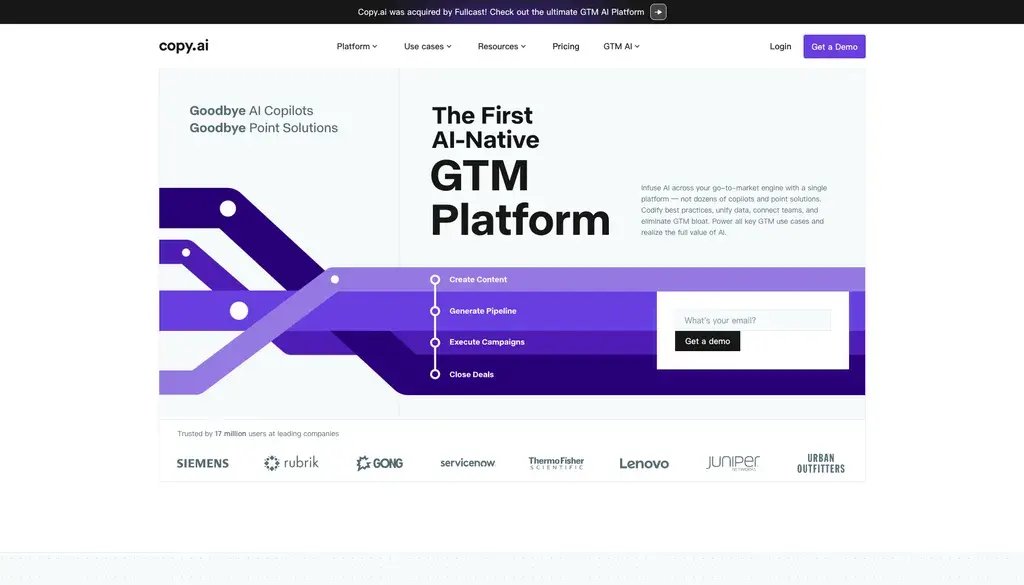
Copy.ai Review 2026: AI Copywriting Made Easy
Our honest Copy.ai review for 2026. We test Content Agents, AI Workflows, pricing ($29-$249/mo), and compare it to Jasper and Writesonic. Find out if it's worth it for your marketing team.

Rytr Review 2026: Is This Budget AI Writer Worth It?
Our hands-on Rytr review for 2026. We test features, pricing, content quality, and compare it to Jasper & ChatGPT. Find out if Rytr is the best budget AI writing tool.

Word Changer - Free AI tool to rewrite and improve your writing instantly
Writing always using repetitive words or need to avoid plagiarism? Word Changer is a free AI writing assistant that instantly rewrites any text with richer vocabulary and appropriate tone. Get multiple versions with one click, adjust formality level, check readability - all for free!

Unite - AI-powered platform for romantic fantasies and dream couple moments
Explore romantic fantasies and create special moments for your dream couple. This AI-powered platform lets you generate personalized romantic content and experience exclusive AI-created romantic experiences.
Comments